India-China Military Talks Focus On Arunachal Tensions
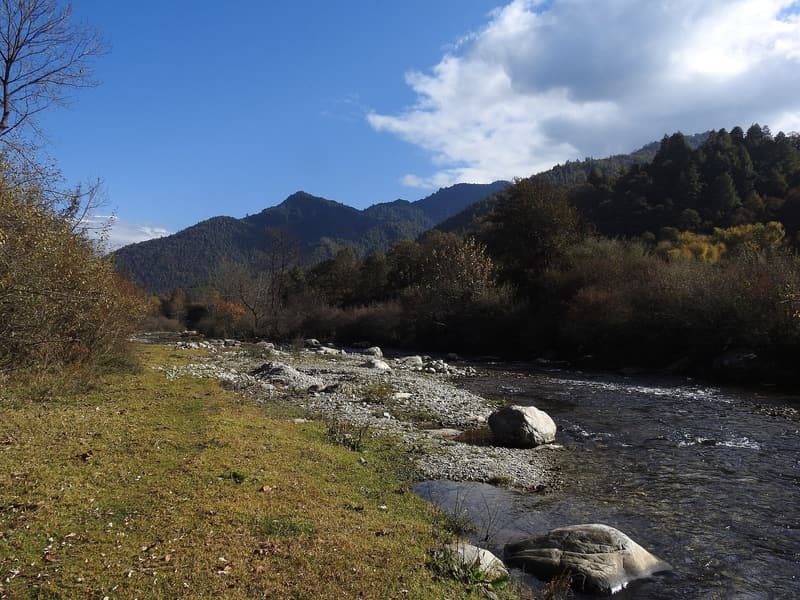
Representative photo · Photo: SaniyaChaplod / Wikimedia Commons, CC BY-SA 4.0
Indian and Chinese military officials have concluded recent discussions aimed at easing border tensions in the eastern sector of the Line of Actual Control.
Military officials from India and China have concluded a series of discussions over the past few weeks regarding the eastern sector of the Line of Actual Control. These India-China military talks were initiated to address rising border tensions near Arunachal Pradesh, a region where local residents have reported sightings of Chinese troops and graffiti since July. The dialogue, which began on September 6-7, followed a meeting between National Security Adviser Ajit Doval and Chinese Foreign Minister Wang Yi in Beijing during August.
India-China military talks in the eastern sector
The recent corps commander-level negotiations were led by Lieutenant General Girish Kalia, commander of the Indian Army's III Corps, and a senior officer from the People's Liberation Army, believed to be associated with the Western Theater Command. While specific details of the discussions remain limited, sources indicate that a visible de-escalation has occurred on the ground. A foreign policy analyst recently noted that the situation is currently under control, supported by a heavy deployment of Indian forces.
Recent military discussions between India and China have led to visible de-escalation along the eastern border.
Historically, the border dispute remains complex, as India and China hold different perceptions of their shared claim lines and do not agree on the total length of the border. The eastern sector spans from Sikkim to Arunachal Pradesh, while the western sector, covering Ladakh and the Chinese-controlled Aksai Chin, remains the most heavily militarized zone. China has maintained claims over Arunachal Pradesh since the 1962 war. In response to ongoing cartographic campaigns, the Indian government recently standardized the names of 27 locations within Arunachal Pradesh.
Furthermore, the regional landscape is evolving as China constructs a major hydropower station on a river in Tibet that flows upstream toward Arunachal. Despite these challenges, India maintains a military advantage in the terrain, bolstered by strategic lessons learned from past conflicts.
Why it matters
The ongoing border situation directly impacts the security dynamics between India and China, two of South Asia's largest powers. The ability to maintain communication through corps commander-level talks is critical for preventing accidental escalation in contested territories.
For residents in the region and the broader Indian public, these developments highlight the persistent nature of the territorial dispute. The focus on de-escalation serves as a mechanism to manage stability along the Line of Actual Control while both nations continue to navigate their complex geopolitical relationship.
Sources
More like this
Malaysia to Send Refugees Back Despite Myanmar Atrocities

Car Bomb Explodes Near Governor’s Office in Villavicencio, Colombia

Danish Supreme Court Upholds Ghetto Law Evictions