Seattle Council to Vote on Parking Tax Increase Amid SDOT Cash Flow Issues
Illustration: NexVani Media
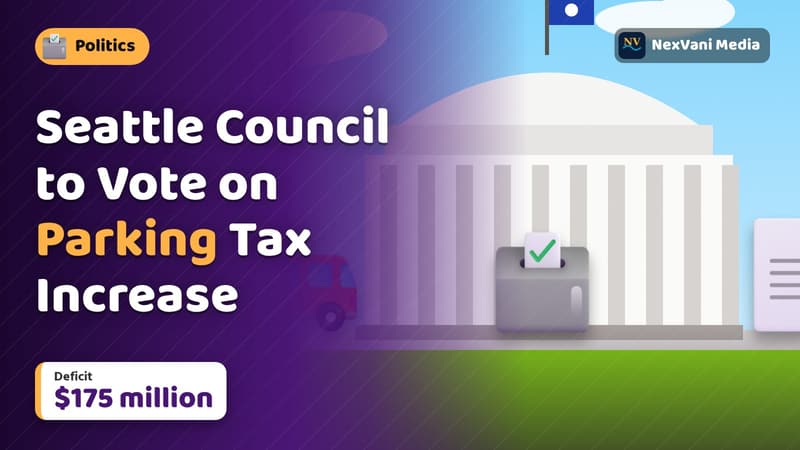
The Seattle City Council is set to vote on a budget proposal that includes raising the commercial parking tax from 14.5% to 17% to address a general fund deficit and SDOT financial hurdles.
The Seattle City Council is scheduled to vote this Friday on a budget proposal put forward by Mayor Katie Wilson, which aims to bridge a $175 million general fund deficit. Among the measures is a controversial commercial parking tax increase that would bump the rate from 14.5% to 17% starting in January. If approved without a public vote, the policy is expected to bring in an additional $9.2 million to $10 million annually, impacting motorists navigating Seattle SDOT regulations and daily city parking.
Under the proposed changes, the cost of the parking tax on a $40 bill would rise from $5.80 to $6.80, excluding existing state and local sales taxes. City budget staff warned lawmakers in a November memo that rejecting the legislation would leave the Seattle Department of Transportation's budget out of balance for 2027 and 2028, necessitating service reductions. Proponents frame the tax as a mechanism to fund essential safety investments and basic services despite ongoing financial turbulence at the agency.
Seattle considers raising commercial parking taxes to combat transportation department cash flow deficits.
Financial Hurdles and Loans
While the commercial tax adjustment is designed to realign transportation spending, it is not earmarked to directly pay off an impending $63.5 million revolving interfund loan that SDOT is currently seeking to cover immediate cash-flow gaps. Councilmember Dan Strauss, the budget chair, expressed concern over the department's financial health, prompting an amendment to move the loan's repayment deadline up to 2028, mandate quarterly interest payments, and require detailed progress reports.
Legislative analysts noted that the department has grappled with cash-flow discrepancies for years, with current investigations centering on accounting practices. Past financial lifelines included a $25 million COVID-19 pandemic-era loan repaid in late 2025 and a $15 million loan cleared in 2022. Although the Select Budget Committee advanced the loan amendment and tax increase last week, council members have cautioned that interfund borrowing cannot serve as a permanent business model for municipal operations.
Why it matters
The upcoming council vote directly affects motorists, commuters, and visitors in the region by driving up the cost of parking across the city, particularly near major venues where rates often exceed $100 for large events. For local taxpayers, the decision highlights municipal budgetary pressures and ongoing financial restructuring within the transportation department.
Sources
More like this
European Commission Accused of Misleading Figures to Fund Egypt
Bikie admits fake invoice use as inquiry probes construction corruption
Australia Weighs Major Surrogacy Law Overhaul to Boost Safety