Tigray displaced families fear renewed war as hopes of returning home fade
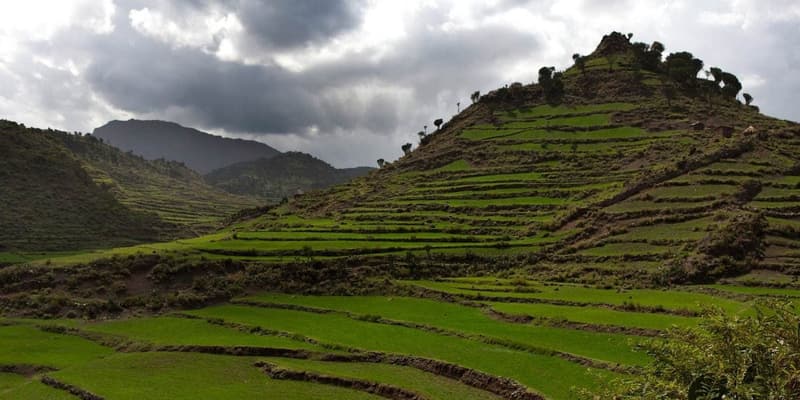
Representative photo · Photo: Mahderey / Wikimedia Commons, CC BY-SA 4.0
Years after the initial conflict began, families in Tigray remain displaced as renewed fighting threatens to undo a fragile peace agreement.
In the northern region of Ethiopia, classrooms that once served students now house families seeking refuge from the ongoing Tigray conflict in Ethiopia. At a former high school in Abi Adi, displaced individuals who fled Western Tigray have replaced desks and chairs with mattresses and cooking tools, waiting for a return home that seems increasingly unlikely. What was intended to be a temporary shelter has become a permanent reality for many, including children growing up in the confines of a school building.
The struggle of Tigray displaced people
For residents like Tewolde, who left Setit Humera years ago, the dream of returning has been shattered by a resurgence of hostilities. Four years after the federal government and the Tigray People’s Liberation Front (TPLF) signed the Pretoria agreement in November 2022, the region remains trapped in uncertainty. While the deal aimed to end a two-year war that claimed an estimated 500,000 lives and displaced millions, it failed to resolve deep-seated territorial disputes, particularly concerning Western Tigray.
Regional tensions escalated on September 22, 2026, when fighting intensified, leading to a brief seizure of the Mekelle airport by TPLF forces. Although federal forces retook the city by October 4, the security situation remains fragile. The federal government has since installed a six-month caretaker administration, yet the underlying political grievances persist. Human Rights Watch and other groups have warned the United Nations that the current violence, including reports of drone strikes and artillery fire near camps, threatens to dismantle the 2022 peace framework entirely.
Renewed fighting in Tigray has left thousands of displaced families facing permanent uncertainty and severe shortages.
Daily life for those in camps like the one in Abi Adi is defined by scarcity. Families report critical shortages of food, clean water, and essential medicines. Mothers like Selass, who fled Humera, struggle to access healthcare for their children, often finding that local clinics lack necessary supplies. This crisis extends to the broader healthcare system; doctors at Ayder Referral Hospital in Mekelle report that they cannot provide sufficient medication, forcing patients to rely on private pharmacies they cannot afford. As the region grapples with the dual impact of damaged infrastructure and fresh combat, the prospect of a stable future for these displaced populations continues to diminish.
Why it matters
The renewed instability in Tigray underscores the fragility of post-conflict peace agreements when core territorial and political disputes remain unaddressed. This ongoing crisis affects millions of displaced civilians who remain trapped in camps with limited access to basic services, while the collapse of local healthcare systems leaves vulnerable populations without life-saving treatment.
Sources
More like this
Former Iraqi Lawmaker Ahmed al-Alwani Found Dead in Beirut

Two University of Mississippi Students Investigated Over Video
US charges three operatives over Iran-backed terror plots including RAF Fairford incident