Australia Faces Surge in Teen Extremism and Online Radicalisation
Illustration: NexVani Media
Australian authorities are reporting a sharp increase in youth terrorism cases, with experts warning that young people are increasingly being drawn into dangerous online subcultures.
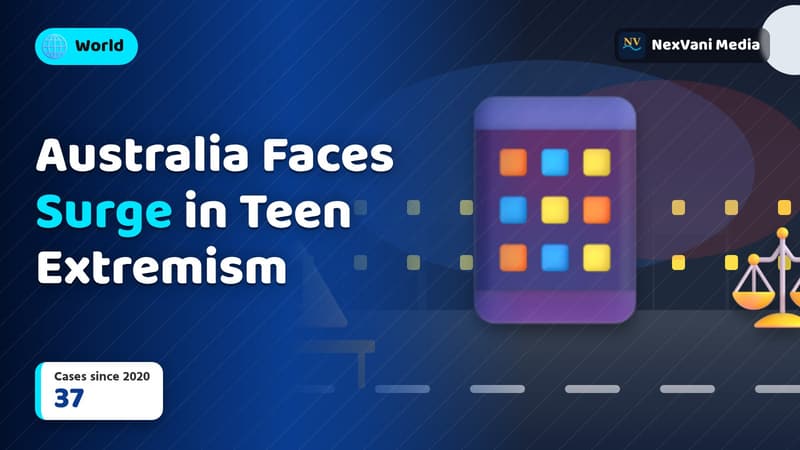
Australian federal police have sounded an alarm regarding a rapid surge in teen extremism, as data shows a significant shift in the demographic profile of those involved in counter-terrorism cases. Since 2020, 37 young people have been prosecuted, with 32 of those cases occurring within the last two years alone. While many are curious about what Australia is famous for, the country is now grappling with a darker reality involving its youth and digital safety.
Investigations reveal that this growth is occurring within a sprawling online ecosystem where networks promote violence and nihilism. Experts have observed that the age of individuals caught in these activities is decreasing, with some as young as 13 appearing before the courts. These teenagers are often found with devices containing extreme, graphic, and degrading content, including footage of mass casualty attacks and animal abuse.
Most individuals charged with federal violent extremist material crimes in Australia are under 18 years old.
The Online Ecosystem
The Australian Federal Police (AFP) review of 55 youth terrorism cases indicates a mixed profile. While many are young men, they come from diverse backgrounds—some from stable homes and others from troubled environments. A common thread is their heavy engagement with online spaces. Experts like Professor Debra Smith of Victoria University suggest that these digital environments provide a sense of identity that can be harmful, socialising young people into transgressive behaviours.
Recent cases highlight the severity of the issue. In the Northern Territory, two teenagers were charged with collecting documents to facilitate terrorism, including material glorifying school shootings. Another teenager was previously charged for possessing videos of white nationalist terrorist attacks. In New South Wales, a teenager pleaded guilty to possessing extremist material after being exposed to such content on social media at age 14.
A Complex Challenge
Experts argue that traditional punitive measures may not be the sole solution. Levi West, a research fellow at the Australian National University, notes that these teenagers are often victims as well as perpetrators. The influence of digital technologies, combined with the lingering effects of pandemic-era lockdowns, has created a unique environment where young people can easily access extreme content. Authorities are now urged to consider developmental factors and provide non-punitive pathways for intervention.
Why it matters
The rise in youth extremism forces a re-evaluation of how societies protect minors from digital radicalisation. It highlights the urgent need for parents, schools, and community organisations to recognise early warning signs of harmful online engagement before it escalates into criminal activity.
Sources
More like this

US Department of State Releases Report on Venezuelan Funds

Woman, 18, pleads guilty to murder of 16-year-old girl in Leeds

Pope Leo XIV calls for Church to make amends to sex abuse victims