Bitcoin Rate Cut Hopes Face Pressure From Rising Diesel Forecasts
Illustration: NexVani Media
Recent upward revisions to retail diesel price forecasts could slow disinflation, potentially delaying Federal Reserve monetary easing and impacting Bitcoin.
This is news, not investment advice. NexVani Media is not a SEBI-registered investment adviser and does not recommend buying or selling any security. Do your own research or consult a registered adviser before investing.
Upward revisions to retail diesel price expectations are threatening to reduce the fuel-cost relief that markets previously anticipated for next year. While crude oil projections are declining, persistent refinery constraints are supporting wider crack spreads and keeping finished fuel costs elevated, which could influence broader economic trends and investor sentiment surrounding digital assets.
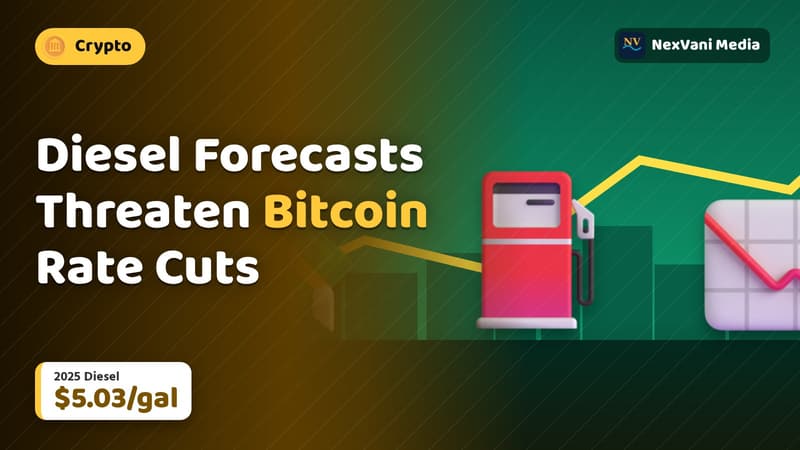
According to the US Energy Information Administration's November outlook, the projected average for US diesel next year was revised to $5.03 a gallon, compared to its previous expectation of $4.49. Although diesel is still expected to decline from its estimated $5.25 average this year, the smaller reduction leaves less room for fuel costs to cool inflation and bring about monetary easing.
Higher diesel price forecasts could keep core inflation elevated and delay anticipated interest rate cuts.
Cheaper crude does not automatically translate into lower finished-fuel expenses. The agency assumes petroleum-product supply constraints will persist through the end of next year, largely driven by damaged refining infrastructure in the Middle East and Russia that has limited product exports. Consequently, US refinery crude inputs are projected to decrease slightly despite comparable utilization rates.
Understanding the Bitcoin Rate Cut Connection
Persistent fuel costs can affect broader prices beyond direct energy components. Federal Reserve Vice Chair for Supervision Michelle Bowman warned that elevated production and transportation expenses could pass into consumer prices and sustain core inflation. While she noted recent price retracements and expected core personal consumption expenditures inflation to move closer to 2% next year, Fed staff research highlights a post-pandemic transmission from oil to core prices.
For Bitcoin, this dynamic operates through monetary policy and investor risk appetite. A previous International Monetary Fund working paper indicated that US monetary tightening depresses cryptocurrency prices through a risk-taking channel similar to equities. If fuel costs prolong underlying inflation and delay rate cuts, that mechanism could constrain risk-taking behavior in digital asset markets.
Why it matters
Refinery constraints and persistent fuel expenses can limit disinflationary progress, potentially influencing the timeline for monetary policy adjustments by central banks. For investors watching a bitcoin rate cut, these macroeconomic variables highlight how traditional energy supply disruptions and refining margins can indirectly affect liquidity and market sentiment across global financial and crypto markets.
Sources
More like this

Stablecoin supply drops by $14.2B in significant 30-day contraction

India Financial Crimes Agency Searches CoinDCX and Delta Exchange
Bitcoin ETFs Face $1.4B Outflows as Investors Reduce Risk Exposure