Eight Books on Indian Politics Documenting History from Partition to the Emergency
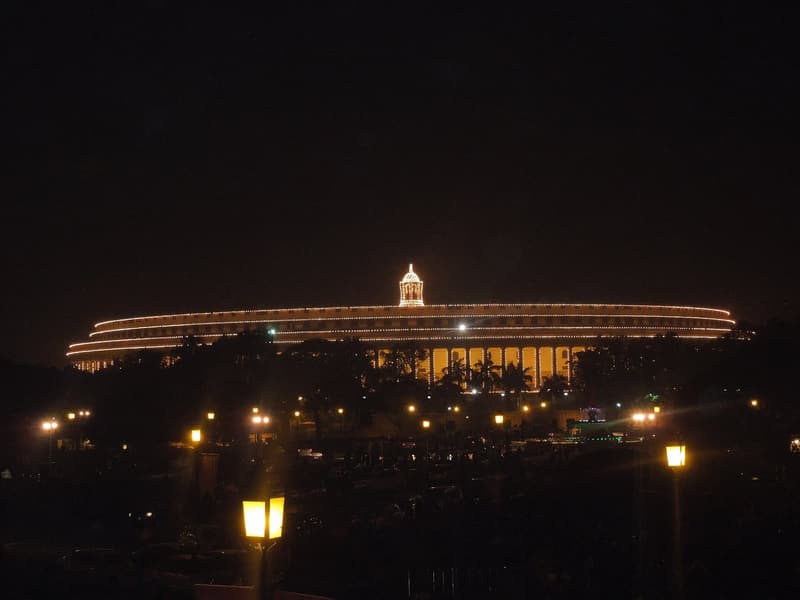
Representative photo · Photo: Sidheeq / Wikimedia Commons, CC BY-SA 4.0
Discover eight notable books by Indian political leaders that document historical milestones from the partition of india to the Emergency.
Indian politics has consistently shaped defining historical milestones, spanning from the freedom struggle and the partition of india to the Emergency and subsequent economic reforms. Books authored by prominent political leaders offer deeply personal accounts detailing the decisions, ideologies, and events that fundamentally transformed the country over decades. From autobiographies to political memoirs and fiction, these written works provide critical insights into national history through the perspective of figures who directly witnessed or participated in major developments.
Among the notable titles is Jawaharlal Nehru's The Discovery of India, written during his imprisonment at Ahmednagar Fort in 1944. The work explores the country's ancient civilisation, culture, philosophy, and historical evolution, reflecting on India's vast diversity. Similarly, Mahatma Gandhi's autobiography traces his personal journey and the development of his principles regarding truth, non-violence, and civil resistance.
Published in 1946, India Divided by India's first President examines the political debates surrounding the partition of india, presenting arguments against the division of British India. In the realm of fiction, former Prime Minister PV Narasimha Rao explored political rivalries and party factionalism in his 1948 novel, The Insider. Former BJP leader LK Advani's 2008 memoir, My Country, My Life, recounts his political journey, discussing the Emergency and the rise of the Bharatiya Janata Party.
Pranab Mukherjee's 2014 book, The Dramatic Decade: The Indira Gandhi Years, revisits the turbulent 1970s, covering the Bangladesh Liberation War and the electoral defeat of 1977. Meanwhile, Sonia Gandhi's memoir offers a personal perspective on her transition from Italy to India's political establishment, her marriage to Rajiv Gandhi, and her leadership of the Congress party. Finally, Jayaprakash Narayan's Prison Diary provides a window into the resistance movement against the 1975 Emergency, highlighting concerns over civil liberties and democratic institutions.
Books by Indian political leaders offer personal accounts of the events that transformed the nation.
Why it matters
These eight literary works provide citizens, researchers, and historians with firsthand accounts of the forces that shaped modern governance in South Asia. By examining personal memoirs and historical analyses from leaders across the political spectrum, readers gain a deeper understanding of the democratic challenges and ideological debates that continue to influence contemporary society.
Sources
More like this
Iraq PM Sacks Nine Officials Over Oil Smuggling Ring
French Judo Olympic Champion Teddy Riner Enters Presidential Race
UK to Consider Age of Consent Review Following Russell Brand Allegations