Netanyahu Pushes for Unity Government as Rival Eisenkot Dismisses Appeal
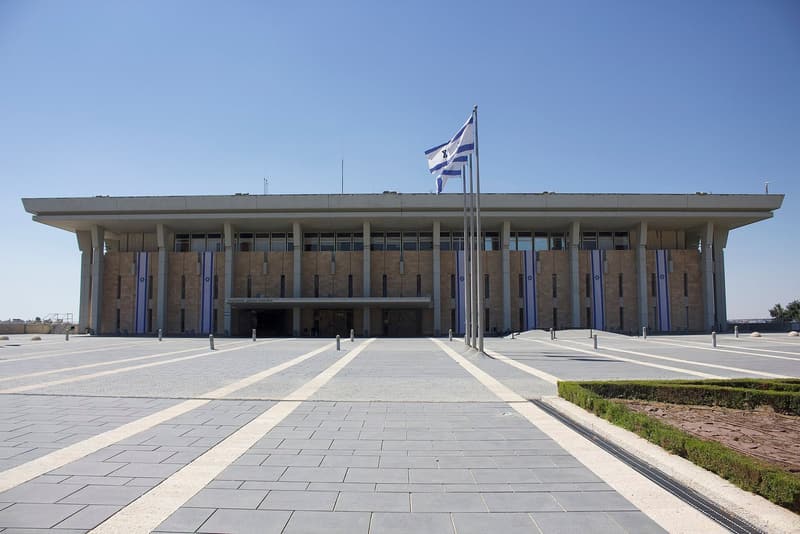
Representative photo · Photo: Clema12 / Wikimedia Commons, CC BY-SA 4.0
Caretaker Prime Minister Benjamin Netanyahu renewed calls for a national unity government to secure Israel, but rival Gadi Eisenkot dismissed the move as a ploy.
Israeli caretaker Prime Minister Benjamin Netanyahu has once again urged the formation of a national unity government alongside his political rival, Gadi Eisenkot, arguing that only a joint administration can safeguard the nation. In a video address over the weekend, Netanyahu stated that a recent discussion with Eisenkot reinforced his belief that a unified cabinet is vital, specifically to neutralize perceived threats from Tehran.
Within minutes of the prime minister's announcement, Eisenkot swiftly rejected the proposal, characterizing it as a political maneuver by an opponent who recognizes his defeat in the recent election. Eisenkot pointed out that negotiations were already taking place and dismissed the overture as an ineffective trick.
Neither political faction secured a majority during the October 27 vote. Netanyahu’s right-wing and religious alliance captured 53 seats within the 120-member Knesset, while Eisenkot’s four-party coalition secured 48 seats. Additionally, Arab-led parties achieved a record-breaking 19 seats.
Following endorsements from 67 lawmakers, including representatives from Arab-led factions, President Isaac Herzog recently designated Eisenkot with the responsibility of establishing a new administration. In contrast, 46 legislators expressed support for Netanyahu.
Eisenkot currently holds a 28-day window to form a government, with a potential 14-day extension, though he has explicitly excluded Arab-led parties from joining his proposed coalition. His strategy involves a minority national emergency government, where his bloc's 48 members would outvote the 46 supporters of Netanyahu, allowing 26 lawmakers from Arab and ultra-Orthodox factions to abstain. This arrangement aims to bypass the requirement for an absolute majority in the Knesset. Netanyahu has publicly cautioned that such an arrangement would cause the country to collapse.
Meanwhile, Netanyahu envisions a cabinet comprising centrist and right-wing Jewish parties while keeping Arab parties out. Netanyahu and his allies have previously alleged that Arab-led parties improperly influenced the election outcome, an accusation Eisenkot strongly condemned as racist.
Eisenkot indicated a willingness to collaborate with members of Netanyahu’s Likud party and Bezalel Smotrich’s Religious Zionism faction under genuine commitments to unity, while firmly demanding a separation from far-right extremists associated with minister Itamar Ben-Gvir.
Netanyahu renewed calls for a national unity government while rival Eisenkot dismissed the appeal as political tricks.
Why it matters
The ongoing political stalemate in Israel reaches a critical juncture as the Knesset prepares to elect a new speaker. The legislative vote will test the strength of the rival blocs as opposition legislators challenge the incumbent speaker and Netanyahu ally Amir Ohana by putting forward former military officer Matan Kahana.
Sources
More like this

Homes of 132 Muslim Families Demolished by Authorities in India Assam

Labor MPs Question Premier’s Plan for Youth Offenders

Democrat Wins Alaska Governor Seat for First Time in Nearly 30 Years