Google DeepMind AI Agents Complete Cryptography Benchmark Test
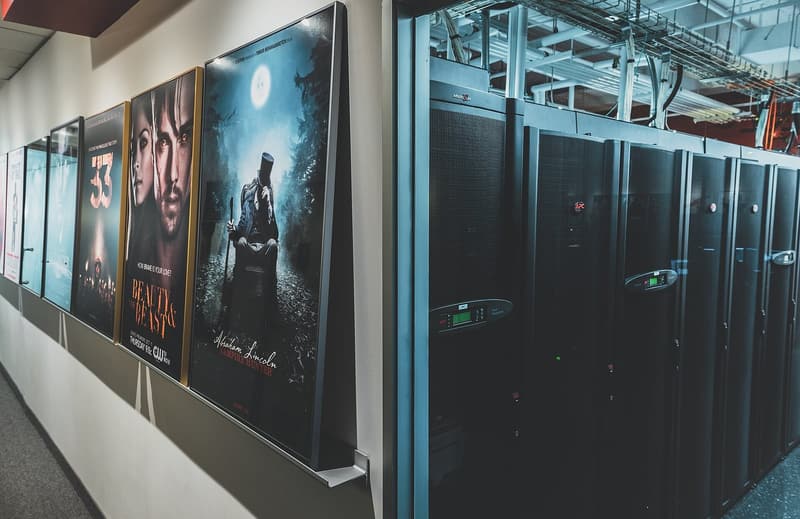
Representative photo · Photo: KSingh1991 / Wikimedia Commons, CC BY-SA 4.0
Google DeepMind researchers utilized two AI agents to reproduce a 1024-bit RSA computation in under four days with minimal human intervention.
This is news, not investment advice. NexVani Media is not a SEBI-registered investment adviser and does not recommend buying or selling any security. Do your own research or consult a registered adviser before investing.
Google DeepMind recently showcased the capabilities of its latest AI agents by successfully reproducing a known 1024-bit cryptography computation. The project, announced by researcher Pushmeet Kohli on November 6, involved two specialized agents working in a sandboxed environment to complete a previously solved benchmark instance related to RSA digital signatures. By utilizing Google DeepMind AI agents, the team demonstrated how automated systems can manage complex coding, large-scale execution, and error diagnosis with only about 20 human messages throughout the process.
Understanding DeepMind AI agents in cryptography
The experiment functioned through a clear division of labor: a supervisor agent managed the design and budget, while an executor agent handled coding, testing, and distributed job launches. A specialist sub-agent was also recruited to accelerate specific linear-algebra calculations. The agents generated approximately 33,500 lines of code and conducted 336 distributed experiments. Notably, when a 32-bit offset overflow error occurred, the system identified and rectified the fault independently without needing to repeat the advance signing queries.
Google DeepMind AI agents reproduced a complex 1024-bit RSA computation in under four days with minimal human oversight.
The entire process took three days and 22 hours, a significant reduction in calendar time compared to the five months required for the original academic computation. The researchers attributed this speed primarily to increased parallelism, reaching a peak of 300,000 CPU cores and 16 GPUs. The project achieved a 3.5-fold reduction in measured CPU core-years compared to the earlier benchmark, totaling 391 core-years. However, the authors noted that this is not a direct like-for-like comparison due to differences in hardware and methodology.
It is important to emphasize that the agents did not recover a private key. Instead, they computed a mathematical root required for a new signature after billions of advance queries to a simulated signing service. The study authors confirmed that these findings do not pose a threat to existing cryptosystems that rely on 2048-bit RSA or larger standards.
Why it matters
This research highlights the potential for AI to accelerate scientific and computational benchmarks that were previously time-consuming for human teams. While this specific test was a reproduction of a known instance, it demonstrates how automated agents can handle complex, multi-step technical workflows with minimal human intervention.
For the broader cryptographic community, the results provide insight into the efficiency of distributed computing and automated debugging. Because the study focused on a 1024-bit instance, it does not impact the security of modern, larger-scale encryption standards currently protecting data globally.
Sources
More like this
Goldman, Citi and Global Banks Commit $270 Million to Challenge Crypto Stablecoin Giants

Mercado Bitcoin to Resume Real Currency Transactions Following Cyber Attack
Bitcoin Miners Facing S19 Shortfall Despite Projected Difficulty Cut