Nepal Urges Grant-Based Climate Finance at COP31
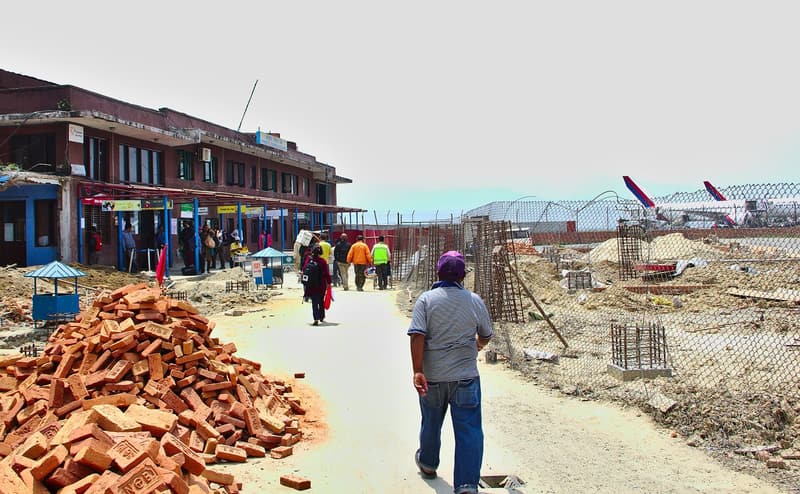
Representative photo · Photo: দেবর্ষি রায় from Brno, Czech Republic / Wikimedia Commons, CC BY-SA 2.0
Minister for Foreign Affairs Shisir Khanal returned to Kathmandu after attending COP31, where Nepal pushed for grant-based climate finance.
Minister for Foreign Affairs Shisir Khanal returned home to Kathmandu today after participating in the 31st Conference of the Parties to the United Nations Framework Convention on Climate Change. According to a press note issued by the Ministry of Foreign Affairs upon his arrival at Tribhuvan International Airport, the Minister had traveled to Antalya, Turkiye, last week following a decision by the Council of Ministers. The Nepali delegation to the conference was led by Minister for Agriculture, Forest and Environment Geeta Chaudhary.
The global conference serves as a primary multilateral forum for defining shared policies to address climate change impacts. Discussions focused on limiting global temperature rise to within 1.5 degrees Celsius, achieving net-zero carbon emissions by 2050, and strengthening adaptive capacities. During his address at the opening plenary on November 9, Minister Khanal drew international attention to recent devastating disasters in Nepal and their severe consequences for local lives, livelihoods, physical infrastructure, and ecosystems.
Nepal Floods and Mountain Resilience
Throughout the summit, the Nepali delegation emphasized ambitious mitigation through deep emission cuts aligned with the 1.5°C goal. They called for predictable, accessible, and grant-based climate finance rather than debt for adaptation, resilient infrastructure, and sustainable livelihoods. Furthermore, the delegation stressed the need for effective Loss and Damage arrangements with swift and equitable resources for frontline mountain communities, along with robust early warning systems and high-altitude glacier monitoring.
On November 11, Minister Khanal and Minister Chaudhary participated in the Antalya Summit. Addressing a high-level event on early warning systems, Khanal highlighted the necessity of data collection, satellite monitoring, and local-language warnings in high-mountain regions. On November 12, during a joint event organized by Nepal, Bhutan, Kyrgyzstan, Pakistan, and Tajikistan, he emphasized that mountain crises put humanity at risk and called for bringing mountain issues into global climate negotiations.
Nepal demanded predictable, accessible, and grant-based climate finance rather than debt at COP31.
Nepal also collaborated on an adaptation finance event with international partners like ICIMOD and the Zoï Environment Network. On November 13, Khanal addressed a session on the climate finance needs of Small Island Developing States and Least Developed Countries, reinforcing the demand for grant-based funds to protect high-altitude Himalayan ecosystems. He also inaugurated the Nepal Pavilion and held bilateral meetings with UN Secretary-General António Guterres, the Foreign Minister of Ethiopia, and Finland's Minister for Foreign Trade and Development.
Why it matters
Nepal's active participation in COP31 effectively presented the unique vulnerabilities of mountainous nations on the global stage. By articulating clear demands for a dedicated work program on mountains, equitable climate finance, and regional cooperation, the delegation's engagements shape international policy discussions that directly impact vulnerable communities across South Asia and high-altitude regions.
Sources
More like this
COP31: UN Climate Chief Urges Negotiators to Avoid Tactical Delays
Choking Fires and Deadly Heat: 2026 in Extreme Weather

Morton Salt Mine Closure in Ohio Raises Winter Safety Concerns