The Red Sea Cannot Be Secured Without Restoring the Yemeni State
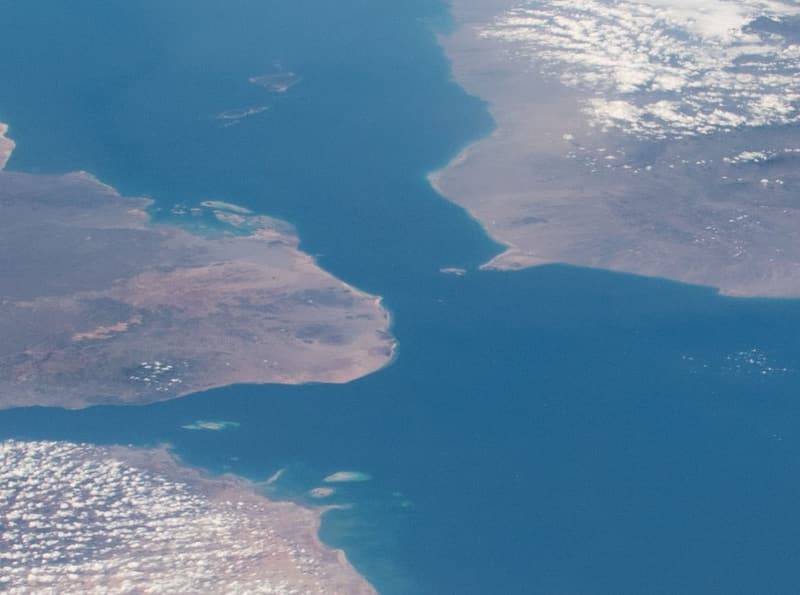
Representative photo · Photo: Earth Science and Remote Sensing Unit, N / Wikimedia Commons, Public domain
Maritime security in the Red Sea remains elusive as the international community focuses on naval deployments rather than addressing the root cause: the collapse of the Yemeni state.
For a decade, the conflict in Yemen was largely viewed as a regional issue confined to the southern Arabian Peninsula. However, recent escalations have demonstrated that the crisis now directly impacts global trade and the strategic interests of every major power. As the Red Sea crisis continues to disrupt vital shipping lanes, it has become clear that naval task forces alone cannot restore order to this critical corridor.
The Red Sea and the Houthi Threat
The ability of the Houthis to endanger transit through the Bab al-Mandeb strait is not merely a military development but a direct consequence of the collapse of Yemeni state institutions. Following the 2014 coup in Sanaa, the Houthis inherited significant military capabilities from a state once ranked among the most heavily armed in the Arab world. With external backing, this group has established a parallel authority that controls strategic territory and uses geography as a tool for international blackmail, posing a threat more durable than that of previous extremist organisations.
Despite the severity of the situation, the international community has largely treated the Houthis as a force to be managed through temporary agreements rather than a threat to be resolved. The 2018 Stockholm Agreement, intended to secure the port of Hodeidah, instead entrenched Houthi control. Furthermore, the lack of a unified front among anti-Houthi forces, exacerbated by the proliferation of armed factions operating outside of a central command, has allowed the militia to consolidate its gains.
Restoring the Yemeni state is the only way to ensure long-term security in the Red Sea region.
Attempts to address the crisis through maritime military deployments fail to account for the land-based reality. Intercepting missiles at sea addresses only the symptoms of the conflict, leaving the underlying conditions—the absence of a functional, sovereign Yemeni state—entirely untouched. A lasting solution requires supporting legitimate national institutions, unifying military forces under a single command, and ending the fragmentation of power centers.
Why it matters
The current approach to the Red Sea crisis prioritizes temporary containment over long-term stability. Failing to restore the Yemeni state leaves the world vulnerable to continued disruptions in global navigation, impacting the strategic security of all nations that rely on these maritime routes.
For the international community, including regional stakeholders, the lesson is clear: accommodating armed groups instead of bolstering national sovereignty only fuels instability. True security requires a shift toward rebuilding Yemen’s state capacity to prevent further regional and global economic fallout.
Sources
More like this
Russian Satellite Intelligence and the Escalation of the Iran-US Conflict
At least 11 killed in major blaze on Thailand Phuket island

Ma Wee Tin O’Shortbreid: A Journey in Search of the Real Highlands