
Researchers training AI in simulation unlock real robot hardware skills
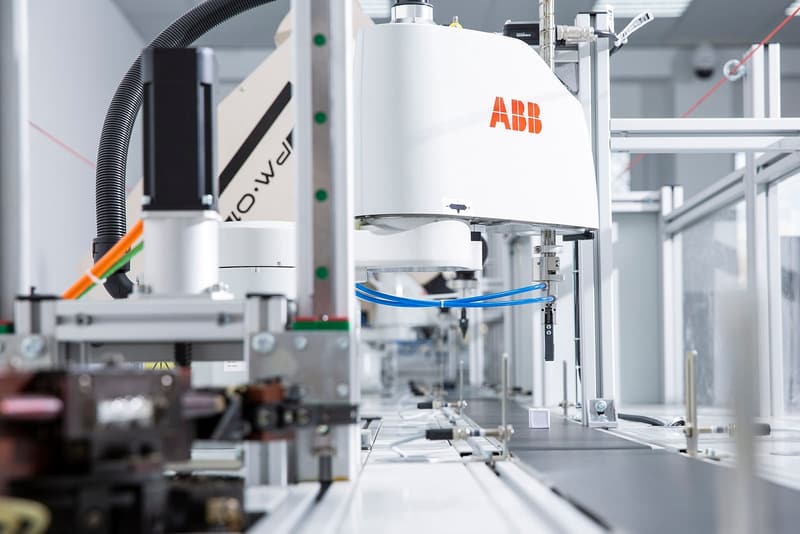
Representative photo · Photo: Нечаева Лилия Александровна / Wikimedia Commons, CC BY-SA 4.0
Scientists testing the PEAR training framework successfully taught a reasoning model to handle physical robotic tasks following virtual practice.
This is news, not investment advice. NexVani Media is not a SEBI-registered investment adviser and does not recommend buying or selling any security. Do your own research or consult a registered adviser before investing.
In a recent preprint submitted on November 13, researchers detailed how a 27-billion-parameter open-weight reasoning model, Qwen3.8-27B, successfully performed physical robotic tasks after completing its training exclusively within virtual environments. This breakthrough offers new evidence that simulated learning can translate directly to distinct physical hardware without prior direct exposure.
The study tested the AI system using a dual-arm YAM robot that had not been included in the model's initial training phase. The physical evaluation consisted of 20 pickup attempts spread across ten different objects, alongside ten alignment tests using five distinct block layouts. The final model completed 18 of the 30 total trials successfully, securing 12 successful pickups and six proper alignments. In comparison, a baseline checkpoint trained purely on the LIBERO simulation benchmark completed only seven of the 30 trials.
Researchers training AI in simulation
During operation, the robotic system ingests camera footage and current hardware status at every turn, processes the information through textual reasoning, and issues targeted adjustments to the gripper's pose. Inverse kinematics then convert these target coordinates into actual joint movements executed by the controller. However, the reliance on detailed prompt descriptions covering coordinate frames, camera setups, and completion criteria heavily influences overall performance.
All tested models operated under a high reasoning-effort configuration, constrained by a 25-round budget per trial where any single round exceeding 32,000 reasoning tokens resulted in failure. Successful runs completed between seven and 24 rounds. While this deep reasoning procedure ensures accuracy, it introduces significant execution delays. The authors noted that separate decoding accelerators could eventually reduce these latency bottlenecks, though current physical trials relied on unquantized weights to preserve precision.
Simulated training successfully transferred complex robot control skills to distinct physical hardware.
Why it matters
This experiment demonstrates that virtual environments can effectively teach physical robots complex manipulation skills. However, significant processing delays and the need for broader task coverage mean further development is required before these models can operate as scalable, commercial robot systems.
Sources
More like this

Nvidia Board Rejects Jensen Huang Return Amid Record Quarter

Bitcoin faces a liquidity drain as Anthropic IPO unlocks millions
Why Microsoft Thinks Smaller AI Models Can Beat Rivals