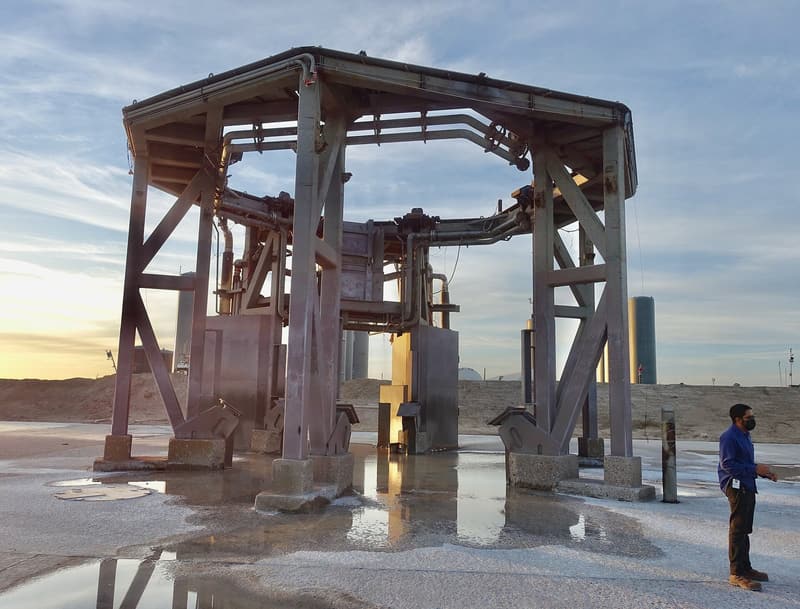
SpaceX Starship returns to launch pad after completing orbit
Representative photo · Photo: Steve Jurvetson from Los Altos, USA / Wikimedia Commons, CC BY 2.0
SpaceX successfully caught the upper stage of its Starship megarocket at its Texas launch tower after a 22-hour orbital test flight, marking a major milestone.
SpaceX achieved a major milestone in its ambitious campaign to make its heavy-lift vehicle reusable when the upper stage of the Starship rocket returned to its Texas launch pad over the weekend. The recent test mission concluded after twenty-two hours in space, during which the spacecraft successfully completed fourteen orbits around Earth.
During the fifteenth test flight for the system, the 171-foot bullet-shaped upper stage descended precisely into the mechanical arms of the launch tower. The monumental achievement represents the first time the company has successfully recovered the upper portion of the massive rocket in this manner, advancing the overall program toward future human spaceflight capabilities.
SpaceX successfully caught the upper stage of its Starship megarocket for the first time.
However, the mission did not go entirely according to plan. The initial objective involved a historic double-catch strategy where both the lower booster stage and the upper spacecraft would return intact to the launch site. Those dual recovery ambitions were disrupted shortly after liftoff when the Super Heavy booster experienced an anomaly in the Gulf of Mexico.
Company representatives explained that the guidance, navigation, and control system triggered a safety protocol because the booster was positioned outside its designated corridor for a successful tower capture. Despite the loss of the lower booster, the successful retrieval of the upper stage is viewed as a significant victory for the aerospace firm.
Understanding the latest spacex starship flight 15
The development schedule remains urgent as NASA works toward a 20th-century style lunar return by 2028, having contracted both SpaceX and Blue Origin for landing services. Chief Executive Officer Elon Musk has outlined plans to significantly increase flight frequencies to a regular weekly cadence, aiming to operate the heavy vehicle with the rapid turnaround of a standard commercial airplane.
Why it matters
The ongoing development of reusable heavy-lift rocketry has profound implications for the future of commercial space exploration and interplanetary travel. By successfully demonstrating the ability to catch large rocket stages at the launch site, the aerospace industry moves closer to drastically lowering the economic barriers associated with accessing Earth orbit and deep space.
These technological leaps directly impact international space agencies, private satellite operators, and upcoming lunar exploration initiatives. While missions currently focus on returning astronauts to the Moon, the broader roadmap continues to target long-term crewed transport to Mars.
Sources
More like this

US Flights Resume After Ageing Technology Blamed for Outage
Senator Warns Against Sacrificing Art for Artificial Intelligence
US Blames Outdated Technology for Nationwide Flight Disruption