US Escalates Sanctions on Iran Targeting Shadow Banking Networks
Illustration: NexVani Media
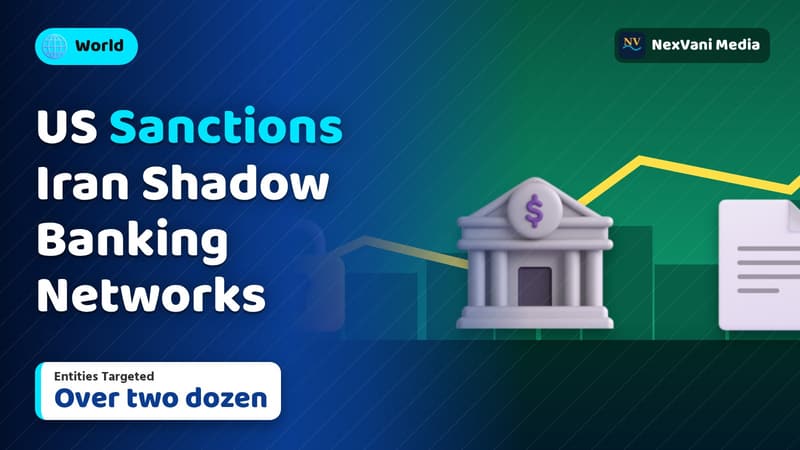
The US Treasury has sanctioned over two dozen Iranian entities to disrupt shadow banking networks as diplomatic tensions remain high.
The United States has implemented a new wave of escalated sanctions against Iran as part of Operation Economic Outcast. This latest measure, announced by the Department of the Treasury on Monday, targets more than two dozen Iranian exchange houses, front companies, and key personnel. The move is intended to disrupt what officials describe as Iran’s global shadow banking networks, which the US claims are used to bypass existing financial restrictions.
The US Treasury sanctioned over two dozen Iranian entities to dismantle Tehran's global shadow banking financial networks.
US Secretary of the Treasury Scott Bessent stated that these financial systems serve as a critical lifeline for the Iranian regime. According to the Treasury, these designated entities facilitate the movement of billions of dollars through the international financial system, granting the regime access to foreign currency. Bessent emphasized that the Treasury intends to continue dismantling these networks to curb the regime's financial capabilities.
Targeting Iran Shadow Banking
The designated entities are overseen by the Central Bank of Iran. Among those targeted is the Nesim Baharan Qeshm Company, which the Treasury alleges collaborated with exchange houses to process transactions for clients of Sarmayeh Bank, including major petrochemical companies. Other entities, such as the Fashki Exchange and Mellat Exchange Company, along with their associated owners and employees, were also included in the sanctions list.
This development follows reports earlier this month suggesting that the US sanctions campaign has significantly impacted the Iranian economy, pushing the rial to record lows and driving inflation to approximately 90 percent. Meanwhile, the broader geopolitical situation remains volatile. While Iranian Foreign Minister Abbas Araghchi has expressed hope for a diplomatic resolution to the nine-month conflict, US President Donald Trump has indicated that he remains unsatisfied with potential deal terms. President Trump has reportedly informed media outlets that he is inclined to order military strikes against Iran after the new year if a formal agreement is not reached.
Why it matters
The ongoing conflict has destabilized the Middle East, leading to disruptions in global shipping and increased energy prices. The continued escalation of sanctions and the threat of military action affect international trade and regional stability, drawing in various countries across the globe that rely on stable energy markets and secure maritime transit.
Sources
More like this
Israel’s Southern Syria Incursion Triggers Fear and Destruction
Metropolitan Police Seize 893kg of Cocaine Hidden in Fruit Shipments
Israel seeks to hold Palestinian student in administrative detention without trial