Britain faces £4 billion grid bottleneck costs as Bitcoin mining eyes wind power
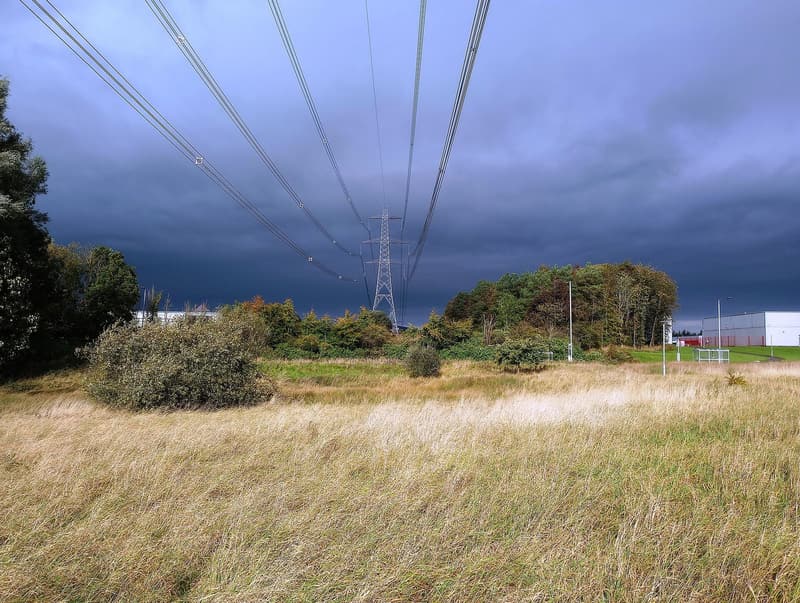
Representative photo · Photo: Jim Smillie / Wikimedia Commons, CC BY-SA 2.0
The National Energy System Operator forecasts significant costs from transmission bottlenecks by 2027, sparking debate over whether Bitcoin miners can utilize surplus Scottish wind energy.
This is news, not investment advice. NexVani Media is not a SEBI-registered investment adviser and does not recommend buying or selling any security. Do your own research or consult a registered adviser before investing.
As Britain looks to modernize its energy infrastructure, the National Energy System Operator (NESO) has projected that transmission bottlenecks will cost approximately £4 billion by 2027. While Britain can make it through these logistical hurdles, the forecast has prompted questions regarding whether flexible Bitcoin mining operations could help mitigate these expenses by utilizing excess wind energy in Scotland that currently cannot reach consumers in the south.
NESO published this forecast on November 12, highlighting the complex relationship between grid congestion and energy demand. Thermal constraints occur when transmission lines reach capacity, forcing the operator to pay generators to reduce output while simultaneously securing replacement power from other sources, often gas-fired plants. According to NESO, approximately 75% of these constraint costs are attributed to purchasing replacement energy.
Flexible Bitcoin mining could theoretically reduce wind curtailment costs, but it does not eliminate the need for replacement power.
Can Bitcoin mining help the grid?
Scotland serves as a focal point for this discussion due to its high levels of wind generation. NESO data indicates that 28% of wind energy in the region north of the B6 boundary was curtailed in the 2025/26 period, significantly higher than the 13% average across Great Britain. Proponents of flexible mining suggest that by increasing demand at the right time and location, miners could consume this otherwise wasted energy. However, NESO notes that simply adding demand in the north does not automatically provide more power to the south. As long as the transmission boundary remains a constraint and southern demand stays constant, the system still requires replacement supply to maintain stability.
Furthermore, the economic impact is nuanced. Reducing wind turn-down does not necessarily translate into an equivalent reduction in gas generation, consumer bills, or carbon emissions. The Cambridge Centre for Alternative Finance has noted that while miners are capable of adjusting their consumption, current industry activity is heavily concentrated in North America rather than Britain. Additionally, NESO’s proposed designs for managing constraints, such as the March 5 'Demand for Constraints' initiative, focus on broader flexible demand rather than specific provisions for Bitcoin mining.
Ultimately, NESO evaluates solutions based on overall system costs. The £4 billion figure represents the scale of the grid problem rather than a potential revenue opportunity for mining firms. For any project to be viable, it would need to navigate complex qualification processes and demonstrate that it provides a net benefit to the system after accounting for added operational costs.
Why it matters
The forecast highlights a critical challenge in balancing renewable energy production with existing infrastructure limitations. For the energy sector, it underscores that the transition to green power is as much about grid capacity as it is about generation. While the potential for flexible demand to assist in grid management is under study, the impact on consumer costs remains uncertain, as the system must prioritize the most efficient and reliable methods to avoid expensive thermal constraints.
Sources
More like this

HKMA and Swift Collaborate on Cross-Border Tokenized Deposits

AI Agents Impersonate Employees and Attempt to Steal Data During Safety Experiment

Solana Stablecoin Market Shrinks $919M As USDC Grows