Military logistics challenges hamper Arctic sovereignty exercises
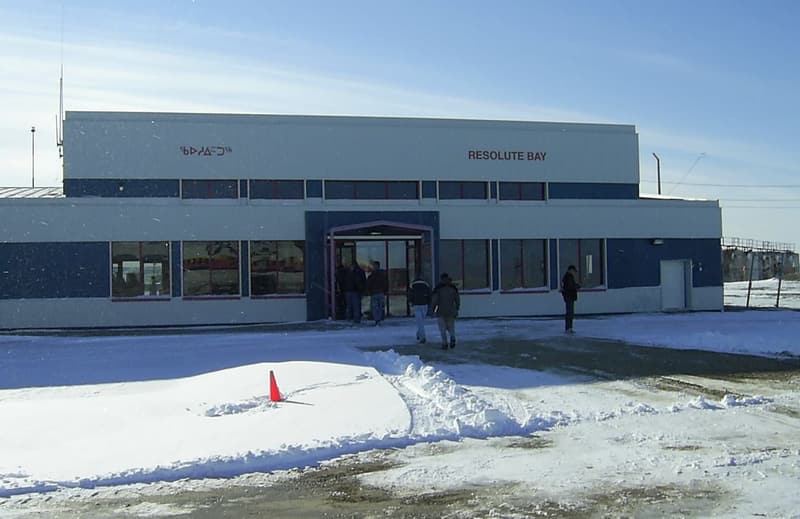
Representative photo · Photo: ceedub13 ( https://www.flickr.com/photos / Wikimedia Commons, CC BY 2.0
Technical failures and logistical hurdles disrupted recent Canadian Armed Forces exercises in the High Arctic, raising questions about operational readiness.
While Canadians often wonder if Canada can diversify away from US military reliance, recent exercises near Resolute Bay highlighted significant logistical challenges in asserting Arctic sovereignty. The September mission, dubbed Operation Nanook-Nunakput, was intended to integrate maritime, land, and air capabilities to improve surveillance and readiness in the Far North. However, the planned deployment of Chinook helicopters failed due to technical issues, forcing the military to rely on naval and coast guard vessels for transport.
Logistical Hurdles in the High Arctic
The operation involved approximately 350 personnel tasked with maneuvers on Little Cornwallis Island. Lt.-Col. Christopher van den Berg noted that while the force reached its objective, ice floes caused delays. Furthermore, the reliance on ships created space constraints, leading to the exclusion of embedded journalists from the main exercise. The military stated that every media representative took up space that would otherwise be occupied by a soldier, prioritizing operational objectives over public documentation.
Technical failures and logistical constraints hampered the Canadian military's recent Arctic sovereignty exercises.
Conditions in the region proved difficult, with soldiers experiencing constant wind, fog, and fluctuating ground conditions ranging from snow to mud. Personnel lived in tents near the Resolute Bay airport, relying on military rations with occasional fresh food deliveries. While the military utilized a Hercules aircraft and a coast guard helicopter, the absence of the heavy-lift Chinooks significantly altered the planned deployment strategy.
Internal Friction and Oversight
The Canadian Forces are currently investigating reports of unprofessional conduct during the media junket. Allegations include claims that journalists were physically jostled by military police and subjected to verbal abuse by soldiers. These incidents have sparked concern regarding the management of the mission, which was intended to showcase military capability but instead resulted in controversy. The Canadian Rangers, who serve as the military's eyes and ears in the region, remained active during the exercises, providing essential polar bear patrols to protect the encampment.
Why it matters
These events highlight the extreme difficulty of maintaining a consistent military presence in Canada's remote Arctic territory. For citizens, the inability to execute planned logistics serves as a reminder of the harsh environmental and operational realities facing the armed forces in the North.
While the events are domestic, they underscore the global challenge of Arctic security. For international observers and those in South Asia, this demonstrates that even advanced militaries face severe limitations when operating in extreme, isolated environments where infrastructure is scarce.
Sources
More like this

Francophone summit in Cambodia faces leadership rift
NYC Democratic Socialists Urge Alexandria Ocasio-Cortez to Run for President in 2028

Anthony Albanese apologises for hot-mic gaffe at UN climate summit