Zimbabwe’s HIV Gains Face a Test Among Young People
Illustration: NexVani Media
While Zimbabwe has made significant progress in reducing HIV infections, health experts warn that complacency among the youth could threaten these hard-won medical achievements.
Harare, Zimbabwe – Decades after the height of the HIV epidemic, the landscape of public health in the nation has shifted dramatically. While the country has seen a marked decline in new infections, understanding the current Zimbabwe HIV statistics remains a critical challenge for health officials. Advances in medical science, including antiretroviral treatment, condoms, and pre-exposure prophylaxis (PrEP), have fundamentally changed the nature of the virus from a near-certain death sentence to a manageable condition.
However, healthcare workers like Shaun Moyo, who has served at Harare’s Parirenyatwa Hospital since the late 1990s, express growing concern. Moyo notes that today’s youth may not fully grasp the severity of the virus because they did not witness the era when funerals were a daily reality. This shift in perception, coupled with social media discourse that sometimes downplays the risks of infection, complicates the mission of public health advocates.
Sustaining HIV prevention gains requires bridging the gap between medical availability and youth engagement.
Addressing the HIV prevention challenge
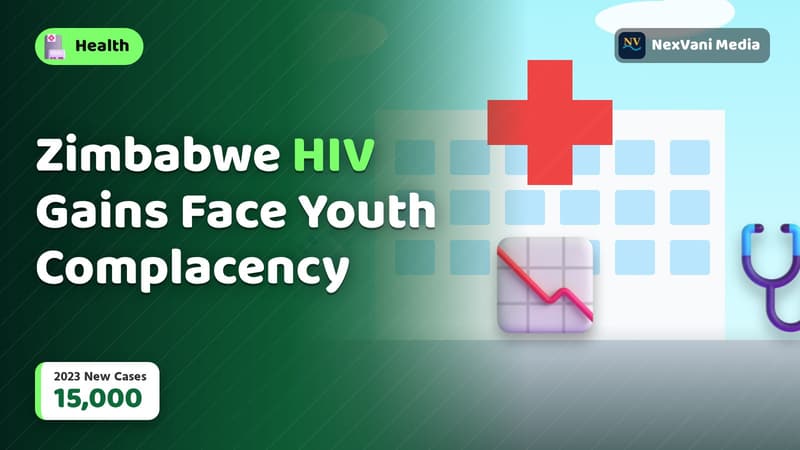
Dr. Misheck Ruwende has warned that the country risks reversing the significant progress made over the last two decades. UNAIDS data shows that annual new HIV infections in Zimbabwe dropped from 79,000 in 2010 to 15,000 in 2023. Among those aged 15 to 24, infections fell from 27,000 to 4,400 during the same period. Despite these improvements, the threat persists across the region, with South Africa reporting 7.7 million people living with HIV in 2023.
Experts argue that traditional, fear-based messaging is no longer effective. Dr. Linda-Gail Bekker, a physician-scientist, emphasizes that communication must resonate with the realities of young people. Clinical trials, such as the recent study on the injectable drug lenacapavir, show the potential for long-acting prevention. However, these tools must be paired with youth-friendly services that allow individuals to seek help and information without fear of judgment. Funding disruptions, including those affecting US-supported programs in Zimbabwe, have further complicated the delivery of essential services like testing and counseling.
Why it matters
The ongoing challenge of managing HIV in young populations is a regional concern that affects public health strategies across Southern Africa. Ensuring that modern prevention tools are accessible and relevant is essential to maintaining the progress achieved over the last thirty years.
For global health observers, this situation highlights that medical innovation alone is insufficient. Success depends on creating environments where young people feel empowered to make informed health decisions, a necessity for sustaining HIV control efforts worldwide.
Sources
More like this
Doctor Survives Ebola in DR Congo Despite Family Fears

NHS England on Track to Miss Key Cancer Treatment Target

People ask what work I've had done about affordable facial mist