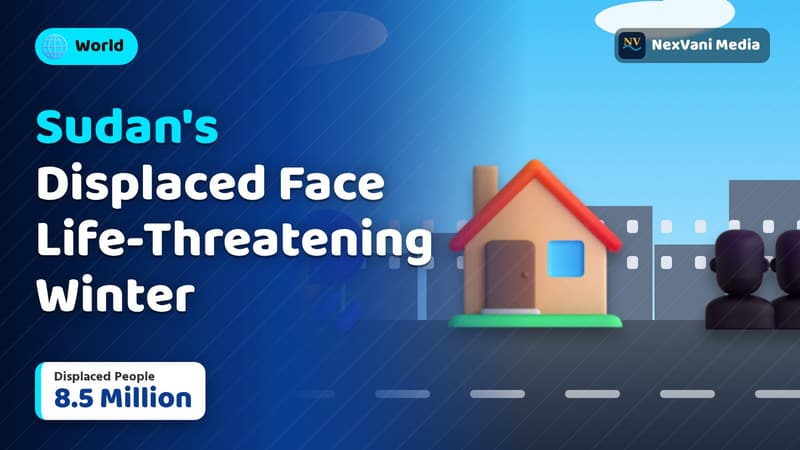
Displaced families in Sudan face harsh winter conditions without aid
Illustration: NexVani Media
As winter approaches, millions of displaced people in Sudan face a severe humanitarian crisis, lacking basic shelter, food, and warmth amid critical funding shortages.
The ongoing conflict in Sudan has left millions of people in a state of being a displaced person, struggling to survive as temperatures drop. Since the war between the Sudanese Armed Forces and the Rapid Support Forces began in April 2023, the humanitarian situation has deteriorated, leaving vulnerable populations in temporary shelters without adequate resources.
Fatima Mohamed Haroun, who fled West Darfur, is currently living in a crumbling mudbrick building in al-Ghadir, Khartoum state. Responsible for four grandchildren after her son went missing and his wife passed away, Haroun has received no formal assistance. She relies entirely on the intermittent generosity of neighbors, often going to bed hungry. With winter approaching, she lacks blankets, warm clothing, and proper shelter, leaving her family exposed to the elements.
Millions of displaced people in Sudan face a life-threatening winter without adequate food, shelter, or humanitarian aid.
The growing crisis for a displaced person
Khartoum state currently hosts over 414,000 internally displaced people. Many, like Kheira Matar Hassan, live in makeshift structures made of bricks, plastic sheeting, and cloth. Hassan, who supports seven children by performing manual labor, fears the impact of the cold on her family. She has received no support from government or non-governmental organizations, highlighting a broader trend of insufficient aid.
Data from the International Organization for Migration indicates that over 8.5 million people are internally displaced across Sudan. Approximately 15.4 million individuals require emergency shelter and household items, yet funding shortages mean aid agencies can only assist about 10 percent of those in need. Less than half of the required $2.9 billion for the 2026 Humanitarian Response Plan has been secured, forcing a reduction in essential services.
Abdelaziz Suleiman Ori, director of culture and information for the Darfur regional government, acknowledged that while a winter plan including blankets and food has been drafted, current resources remain insufficient. He emphasized that the crisis requires a collective response from the government, international agencies, and local communities to address the suffering of those living in precarious conditions.
Why it matters
The deepening humanitarian crisis in Sudan threatens the survival of millions who have lost their homes. As funding gaps persist, the inability to provide basic winter necessities like blankets and heating risks a surge in health crises and mortality among the most vulnerable, particularly children and the elderly.
Sources
More like this
US Army to Proceed With Iowa Ammunition Plant Explosives Detonation
Life in Exile: Rohingya Families Face Hardship in Cox’s Bazar Refugee Camp

Tragic Search for Missing Ukrainians as Russian Strikes Hit Kyiv Region