Gadi Eisenkot Accuses Benjamin Netanyahu of Racist Campaign Against Arab Minority
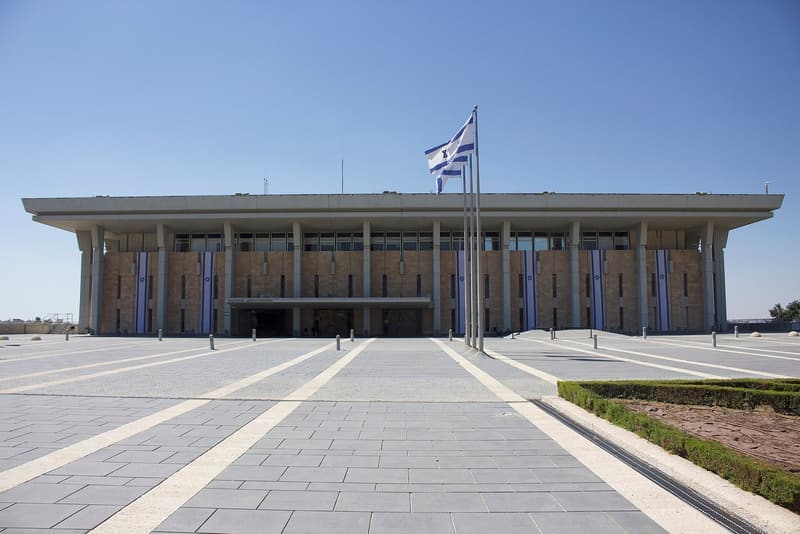
Representative photo · Photo: Clema12 / Wikimedia Commons, CC BY-SA 4.0
Prime ministerial hopeful Gadi Eisenkot has condemned Benjamin Netanyahu for allegedly fueling a racist campaign against Israel's Arab citizens.
In a sharp political escalation, Israeli prime ministerial hopeful Gadi Eisenkot has publicly accused caretaker premier Benjamin Netanyahu of spearheading a discriminatory campaign against the nation’s Arab minority. The tension between the two leaders has intensified as the country navigates a complex period of government formation, with the debate centered on the role and legitimacy of Arab lawmakers within the political system. The ongoing political discourse surrounding Eisenkot and Netanyahu has become a focal point for the electorate as they weigh the future of the nation's governance.
Eisenkot, who was tasked by President Isaac Herzog with forming a new government following recent elections, took to social media to denounce the rhetoric used by the outgoing prime minister. He argued that Arab citizens are an essential part of the Israeli narrative and criticized the attempts to collectively vilify them for political gain. According to Eisenkot, such tactics represent a significant violation of civic responsibility and democratic principles.
Gadi Eisenkot has condemned Benjamin Netanyahu for allegedly fueling a racist campaign against Israel's Arab minority.
The Eisenkot Netanyahu political divide
Netanyahu and his political allies have consistently targeted leaders of the Arab-majority parties, specifically Raam and the Joint List, accusing them of ties to Hamas. This criticism intensified following the October 7, 2023, attack on Israel. While Netanyahu has alleged that these parties refuse to recognize Israel as a Jewish state and seek to establish an Islamic or nationalist Palestinian entity, leaders of the Arab parties have explicitly condemned the Hamas attack. Furthermore, electoral authorities have dismissed Netanyahu’s repeated claims of electoral fraud regarding these parties.
The friction was further highlighted during a recent ceremony where National Security Minister Itamar Ben Gvir heckled Joint List leader Yousef Jabareen, accusing him of pledging allegiance to Hamas during his oath of allegiance. Despite these tensions, the two Arab-majority parties secured 19 seats in the latest election, making them potential kingmakers in the current government formation process. Eisenkot has maintained that while political disagreement with Arab representatives is legitimate, maligning an entire community is unacceptable.
Eisenkot currently faces a 28-day window to form a coalition, though he faces internal pressure from right-wing allies like Avigdor Lieberman, who has threatened to withdraw support if Arab parties are included in the government. Should Eisenkot fail to secure a mandate, the task will likely pass to Netanyahu.
Why it matters
This confrontation marks a rare instance of a prominent Jewish political leader taking a firm stand to defend the rights and status of Arab Israelis, who represent over 20% of the population. The outcome of this political deadlock will determine the future direction of the Israeli government and the inclusion of minority voices in national policy.
Sources
More like this

Hungary seizes millions in cash buried in forests amid corruption probe
Mamdani and Trump agree to 90-day SNAP guidelines delay for corner stores
Lauren Boebert defeated in Colorado congressional race by Eileen Laubacher