
At Least 10 Killed in Guinea Gold Mining Crackdown Clashes
Illustration: NexVani Media
At least ten people died during clashes between security forces and protesters in Guinea as authorities enforced a ban on artisanal gold mining.
At least 10 people have lost their lives and 13 others sustained injuries during violent confrontations in northeastern Guinea. The unrest erupted between protesters and security forces who were deployed to enforce strict new restrictions on gold mining operations in the region.
The country’s Ministry of Territorial Administration reported that the clashes took place when defense and security personnel were verifying the implementation of an official ban on artisanal gold mining. The violence specifically broke out in Balato, located within the Siguiri area, during a patrol aimed at halting illegal and unregulated mining activities. Protesters set up barricades to obstruct the patrol, leading to an escalation that resulted in exchanges of gunfire, though the government statement did not identify who initiated the shooting.
Among the fatalities were 10 individuals, including five foreign nationals whose identities have not yet been confirmed. The injured victims comprise both civilians and members of the security forces. During the chaos, two pick-up trucks belonging to civilians and one belonging to security forces were set on fire. Additionally, protesters seized a firearm and a motorcycle from the authorities. Judicial bodies have now been directed to investigate the trigger for the violence and assign accountability.
Ten people were killed in Guinea during clashes over a ban on artisanal gold mining.
The government of Guinea originally enacted the ban on artisanal gold mining in Siguiri due to severe environmental degradation caused by non-compliance with regulations. Authorities cited extensive pollution affecting agricultural land, local rivers, and vegetation cover, alongside the destruction of farmland by heavy machinery and river contamination from chemicals.
The enforcement of these restrictions has triggered a massive regional displacement. Neighboring Mali reported that roughly 100,000 people arrived in Bamako, with an additional 60,000 reaching the border town of Kouremale after being forced to leave Guinea. Meanwhile, Burkina Faso confirmed it repatriated over 45,000 of its citizens who had to depart Guinea because of the mining suspension. Artisanal mining traditionally supports the livelihoods of more than 300,000 people in Guinea, fueled by rising metal prices and demand across West Africa.
Why it matters
The crackdown and subsequent ban on artisanal mining in Guinea highlight the severe tension between enforcing environmental regulations and protecting local livelihoods. With hundreds of thousands dependent on small-scale mining and thousands already displaced across international borders, the crisis underscores the heavy socio-economic toll of sudden resource management shifts in West Africa.
Sources
More like this
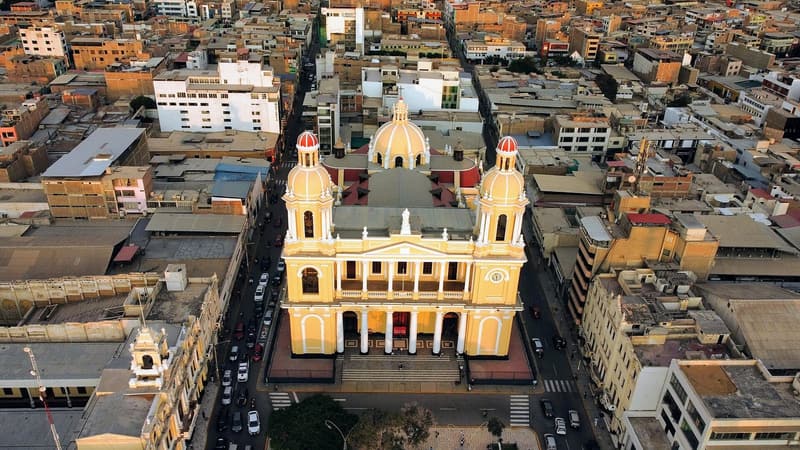
Peruvian Pope Leo XIV returns to Chiclayo during Latin America tour

Iran honours fallen soldiers from Iran Iraq war

Europe's Security Framework Faces Risks Amid Talks