
How to spot November's planetary parade in the pre-dawn sky
Illustration: NexVani Media
Stargazers can view a rare diagonal alignment of four planets throughout November, with special celestial events occurring mid-month.
As people search for how to spot the celestial movements this month, astronomy enthusiasts are being treated to a rare diagonal parade of four planets in the pre-dawn sky. Throughout November, Mercury, Venus, Mars, and Jupiter will all be visible to the naked eye, stretching across the south-eastern to eastern horizon. To witness this spectacle, observers should find a location away from light pollution with a clear view of the eastern horizon, allowing their eyes about twenty minutes to adjust to the darkness. The optimal viewing window is approximately 45 to 60 minutes before sunrise.
Understanding how to spot the planets
Venus is particularly easy to locate as the brightest object in the night sky after the Moon, owing to its high albedo. It will appear higher in the sky than Mercury, which remains close to the horizon due to its proximity to the Sun. Observers should distinguish Venus from the nearby star Spica by noting that planets glow steadily while stars twinkle. Meanwhile, Mars is currently positioned high in the eastern sky, with the brighter Jupiter located below it. A notable highlight occurs on November 16, when the two planets will appear separated by only 1.2 degrees, roughly the width of a finger held at arm's length, according to the Royal Observatory Greenwich.
Mercury, Venus, Mars, and Jupiter form a visible planetary parade in the pre-dawn sky throughout November.
As the month progresses, the celestial display evolves. From November 24, a full Moon—the first of four consecutive supermoons—will join the morning lineup. While the four main planets are visible to the naked eye, those equipped with binoculars or telescopes may also catch glimpses of Uranus setting in the west, while Saturn and Neptune remain visible during the evening hours. The close proximity of Mars and Jupiter near the star Regulus may create the illusion of a triple star formation for casual observers.
Why it matters
This rare alignment offers a unique opportunity for stargazers to observe multiple planets simultaneously without complex equipment. The event provides a clear, accessible way for the public to engage with astronomy. Whether in India or elsewhere, these planetary movements remind observers of the dynamic nature of our solar system, encouraging a deeper appreciation for the night sky.
Sources
More like this

Giant lunar sculpture on display at St Helier Methodist Centre
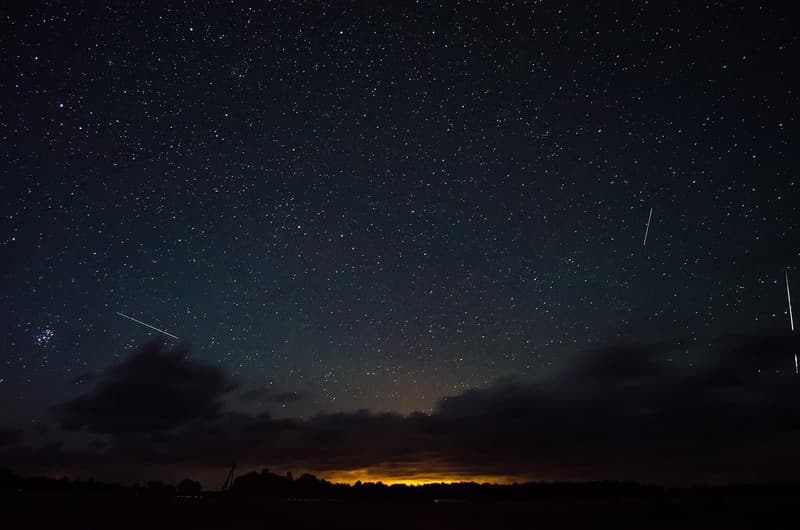
Leonid meteor shower peak: When and where to watch the fast shooting stars

California Band of Olive Ridley Sea Turtles Released After Historic Nesting