Leonid meteor shower peak: When and where to watch the fast shooting stars
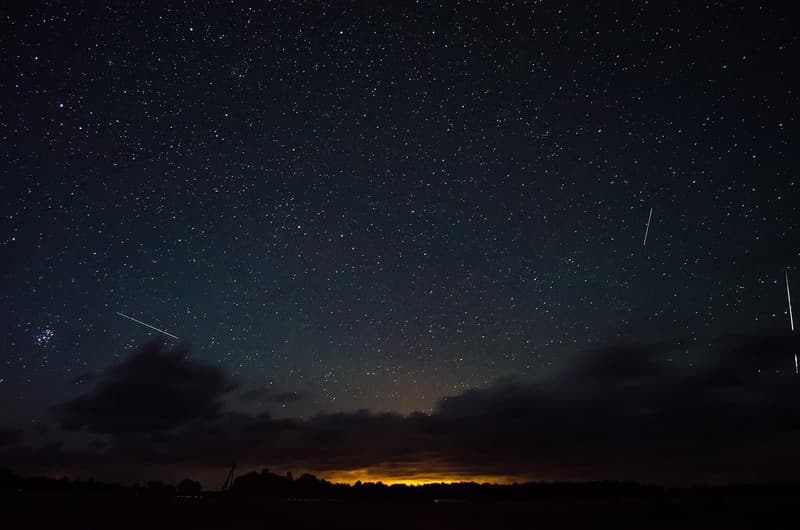
Representative photo · Photo: Kristian Pikner / Wikimedia Commons, CC BY-SA 4.0
The Leonid meteor shower reaches its peak this week, bringing some of the fastest shooting stars of the year across the night sky.
Stargazers around the globe are preparing for the annual Leonid meteor shower, which returns this week as Earth crosses through the orbital path of Comet Tempel-Tuttle. Racing at remarkable speeds of approximately seventy-one kilometers per second, these particles produce bright streaks and occasional glowing trails that linger in the atmosphere. According to the International Meteor Organization, the event is active through the end of November, with the peak expected late on the night of November seventeen into the morning of November eighteen.
Unlike busier showers such as the Perseids or the Geminids, the Leonids typically produce a lower hourly rate under normal conditions, with about fifteen meteors visible per hour under dark skies. However, what these fast-moving debris particles lack in sheer numbers, they make up for in velocity and a storied history of intense meteor storms. These storms occur when Comet Tempel-Tuttle passes near the sun every thirty-three years, occasionally releasing dense clouds of debris that result in thousands of meteors per hour.
The fast-moving Leonid meteor shower peaks this week with up to fifteen shooting stars an hour.
Observers interested in catching the display can expect favorable conditions this year. The moon reaches its first quarter phase on November seventeen and sets around midnight, leaving the post-midnight hours dark for viewing. Because the radiant point within the constellation Leo rises in the east around midnight, the best viewing window extends from midnight until dawn, when the constellation climbs higher in the night sky.
To experience the best possible views, astronomers recommend heading away from bright city lights and allowing twenty minutes for eyes to adjust to the darkness. The meteors originate from the radiant in Leo but can appear across any part of the sky, making a wide, unobstructed view ideal. Observers in both the Northern and Southern hemispheres can spot them, though conditions generally favor northern observers where Leo ascends higher.
Why it matters
The annual appearance of the Leonids offers both amateur astronomers and the public a chance to observe celestial mechanics in action, linking modern stargazing to historical scientific discoveries dating back to the nineteenth-century storms over North America. Understanding when to watch helps enthusiasts plan their viewing around optimal times and moon phases.
Sources
More like this

California Band of Olive Ridley Sea Turtles Released After Historic Nesting

Mushroom lovers in UK warned to avoid grow kits over invasive species risk

Decline of the EPA’s Aspect chemical-detection plane leaves communities at risk