Kathmandu is going digital: Urban expansion threatens local wildlife habitats
Illustration: NexVani Media
Rapid digital infrastructure growth in Kathmandu is disrupting local ecosystems, causing habitat loss and fatal accidents for birds and animals.
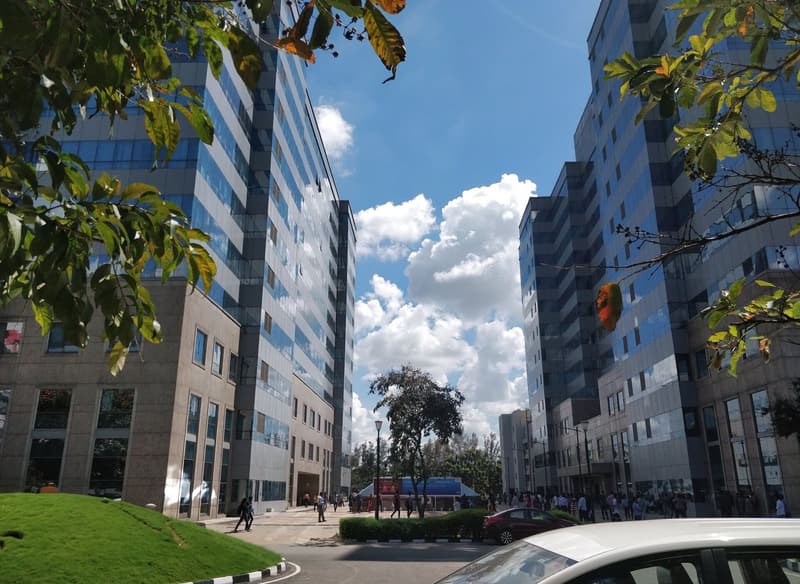
As Kathmandu is going digital, the rapid expansion of telecommunications infrastructure and urban development is creating an invisible crisis for the city's biodiversity. Across the Kathmandu Valley, the push for smart city initiatives has introduced over 1,200 telecom towers, extensive optical fiber networks, and constant artificial lighting. While these advancements support the government's Digital Nepal ambitions, they are fundamentally altering the natural environment for local species.
Long-time residents like 88-year-old Badri Lal Tandukar have observed a stark decline in wildlife. Once-common sounds, such as the howling of jackals, have vanished, while birds struggle to find nesting sites amidst concrete buildings and tangled cables. Ornithologists report that birds often use hazardous materials like metal wires for nests, leading to frequent electrocutions. Furthermore, bright LED floodlights and decorative lighting on trees are disrupting the natural navigation and breeding cycles of nocturnal creatures, including owls and bats.
Unregulated digital infrastructure expansion is destroying urban biodiversity and disrupting natural wildlife cycles in Kathmandu.
The cost of connectivity
Data from the journal Land highlights the scale of this transformation, noting that built-up concrete areas in the valley increased from 50 square kilometers to over 117 square kilometers between 2001 and 2021. During this same period, forest cover significantly declined. Despite these changes, government agencies have yet to conduct formal studies on the environmental impact of this growth. Officials from the Ministry of Forests and Environment suggest that Nepal’s technological adoption is still in its early stages, though they acknowledge that potential environmental impacts require monitoring.
Beyond habitat loss, infrastructure like tall towers and cooling fans at data centers pose direct threats. Guy wires on towers act as invisible traps for migratory birds, while noise and heat pollution from data centers affect nearby residential areas. Conservationists are now calling for bird-friendly standards and the removal of disruptive lighting from public trees to protect shared urban habitats.
Why it matters
The lack of environmental regulation in digital infrastructure expansion threatens urban biodiversity, affecting species that rely on stable ecosystems. This issue highlights the urgent need for green telecommunications standards in South Asia, where rapid urban growth often prioritizes connectivity over ecological preservation.
Sources
More like this

Google driverless car faces scrutiny after stalling in floodwaters

Waymo Suspends Driverless Freeway Rides After California Safety Ban

Mike Lynch yacht sinking report reveals previously unknown wind vulnerability