Weight-loss drugs used in nearly one in 10 homes in Great Britain, study finds
Illustration: NexVani Media
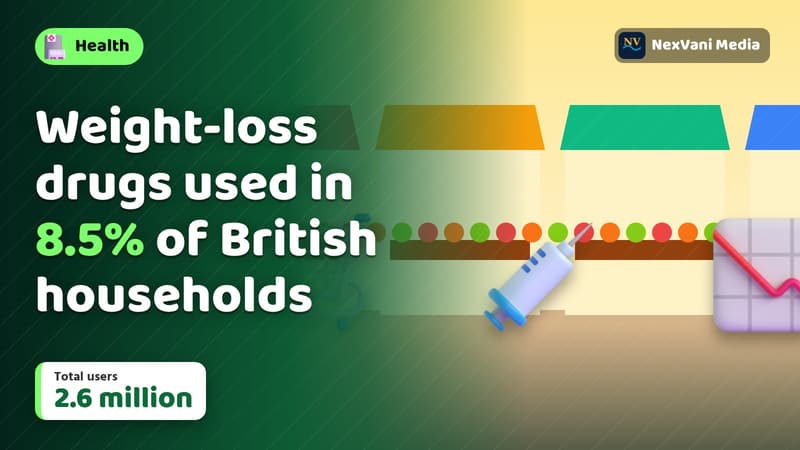
New research indicates that 8.5% of households in Great Britain now use weight-loss medication, with usage rising significantly among men and those opting for pill-based treatments.
A recent study by Worldpanel by Numerator reveals that weight-loss medication is becoming increasingly common across Great Britain, with at least one person using the drugs in 8.5% of households. This figure represents a notable increase from 6.3% in February, bringing the total number of adult users to approximately 2.6 million by August. As people seek the weight loss best tablet options, the landscape of consumer health is shifting rapidly.
The surge in usage is largely attributed to the approval of pill-based versions of GLP-1 drugs, such as Wegovy, which were cleared for use in the UK in June. Previously, patients were limited to injectable treatments. According to the data, pills now account for over 11% of GLP-1 users. Furthermore, the demographic profile of users is changing; men now represent 32% of the total, with the number of male users nearly doubling to 830,000 in just nine months.
GLP-1 weight-loss medication is now present in more British households than vegetarians and pescatarians combined.
Changing consumer habits
The widespread adoption of medications like Mounjaro and Wegovy is significantly altering grocery shopping habits. A survey of over 9,600 households found that those with a GLP-1 user spent a collective £1 billion less on groceries over the past year than comparable households. This shift equates to 415 million fewer items purchased, with an average reduction of £389 per year in shopping baskets.
Nishita Pattni, a senior consultant at Worldpanel by Numerator, noted that the growth in user numbers between February and August 2026 nearly matched the total increase from the previous year. She added that the convenience of a daily pill compared to an injection, combined with rising interest among men, suggests continued growth.
Market impact
The reduction in spending is not uniform across all categories. Products associated with indulgence and impulse buying, such as crisps and alcohol, have seen a 15% decline in spend among GLP-1 users. Conversely, there is a growing demand for portion-controlled items, with frozen ready-meals seeing a 30% rise in sales. Some users are also increasing their spend on smaller treats, such as hot chocolate and malt drinks.
Why it matters
Chantel Kennaugh of Worldpanel by Numerator suggests that usage could exceed 10% of households in 2027, marking a seismic shift in consumer behavior. This trend forces retailers and manufacturers to rethink their strategies, as the popularity of these drugs now rivals that of major household brands like Corona beer or Kellogg’s Rice Krispies.
Sources
More like this

Unvaccinated Pennsylvania Resident Dies Amid Historic Measles Resurgence

India aims to add 75,000 medical seats by 2029
Yvette Cooper Announces Neighbourhood Support Teams to Reform Social Care