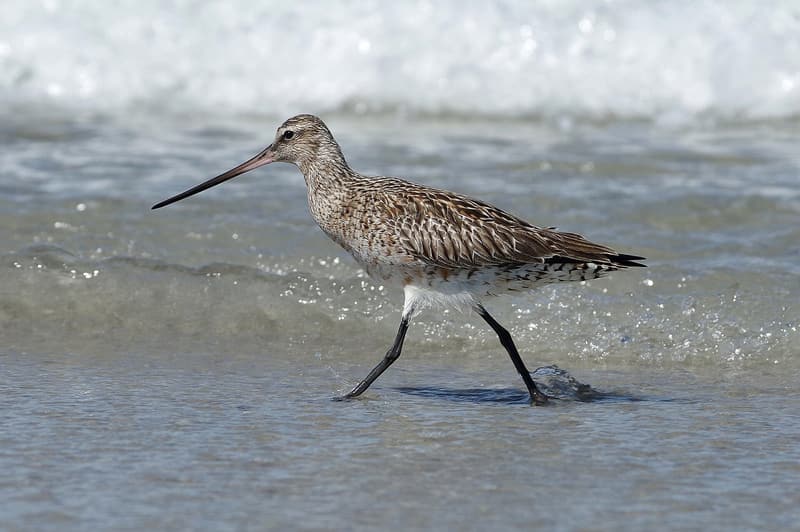
Phil the bar-tailed godwit completes 6,800-mile migration to Siberia
Representative photo · Photo: Hobbyfotowiki / Wikimedia Commons, CC0
Scientists have tracked a bar-tailed godwit named Phil on a remarkable 6,800-mile round trip from Norfolk to Siberia, highlighting the endurance of this migratory species.
Researchers have successfully mapped the extraordinary migratory journey of a bar-tailed godwit named Phil, providing new insights into the endurance of this long-distance traveler. While some might search to meet Phil Foden or other celebrities online, this particular Phil is a wading bird that has captured the attention of the scientific community for his record-breaking flight patterns.
Tracking a long-distance migrant
The project, led by the Wash Wader Research Group, utilized a lightweight 6g tracker to monitor the bird's movements. Phil was named in honor of the group's long-time leader, Phil Ireland. Fitted with the device in January at the Wash, the bird's journey was meticulously recorded as he traveled across international borders. In March, Phil visited the Wadden Sea coasts of the Netherlands, Germany, and Denmark. By late May, he had reached the Taymyr peninsula in central Siberia to breed.
A bar-tailed godwit named Phil has completed a 6,800-mile round trip between Norfolk and Siberia.
Following his breeding season, Phil began his return journey, flying over the Arctic Ocean near northern Norway and stopping at three small islands before heading back to the Wadden Sea. He has now safely returned to RSPB Snettisham on the edge of the Wash. This location is significant as a site where thousands of birds congregate during high tides, creating a major wildlife spectacle during the British winter.
Why it matters
This study highlights the importance of the east Atlantic flyway, a critical migratory route stretching from the Arctic to South Africa. The Wash serves as a vital feeding and resting ground for millions of birds, but experts emphasize that this network of wetlands is essential for survival. Protecting these migratory species requires a global effort, as individual sites are part of a larger, interconnected system of habitats that birds depend on throughout their long journeys.
Sources
More like this

NASA Voyager 1 Reaches One Light-Day Distance

Voyager 1 reaches one light-day from Earth after 49 years in space

Prehistoric rock paintings discovered near Hyderabad