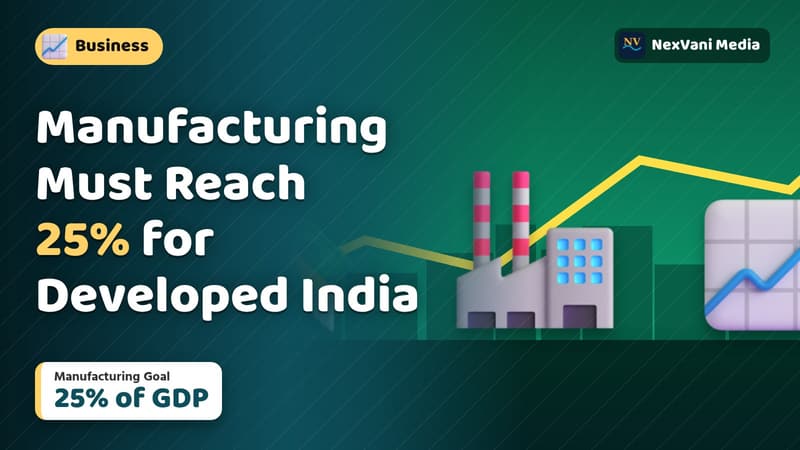
Manufacturing Must Reach 25% of GDP for Developed Status by 2047: EAC-PM
Illustration: NexVani Media
India requires an economic growth rate of roughly 8% annually and a larger manufacturing sector to achieve developed status by 2047.
India must substantially scale up its manufacturing sector and maintain an annual economic growth rate of approximately 8% across the upcoming two decades if it aims to attain developed-economy status by the year 2047. This assessment was shared by S Mahendra Dev, Chairman of the Economic Advisory Council to the Prime Minister, during a recent industry event in Mumbai.
Speaking at the CII Financing Summit 2026, Dev pointed out that the current contribution of manufacturing to the national gross domestic product sits at 16% to 17%. To successfully meet the overarching targets set for the centenary of India's independence, this share needs to expand to 25% over the next two decades.
India must raise manufacturing's contribution to GDP to 25% by 2047.
Maintaining the necessary economic momentum also calls for an investment rate of roughly 34% to 35% of GDP. Data from 2025-26 indicates that gross fixed capital formation reached 31.9% of GDP. Dev noted that public infrastructure investment plays a vital role by enhancing connectivity and lowering production and transportation costs, which in turn encourages private sector participation.
However, public spending alone cannot satisfy all national requirements. Because households account for about two-thirds of domestic savings within the country, how these financial resources are utilized will heavily influence overall investment financing.
Broadening Long-Term Financial Sources
Addressing the audience in Mumbai, the EAC-PM Chairman stressed that conventional bank lending cannot single-handedly fulfill the capital demands of India's long-term development plans. Different types of economic investments demand diverse financing structures.
Dev underscored the importance of alternative avenues for long-term capital, pointing to the corporate bond market, equity markets, insurance firms, and pension funds as essential contributors to funding future growth.
Why it matters
This policy perspective shifts the focus toward expanding non-banking financial channels and boosting private sector involvement to support national industrial goals. For readers and industry stakeholders in India, it highlights the need for diversified capital sources beyond traditional bank loans to sustain long-term economic expansion.
Sources
More like this

US Consortium Wins Kenya Mining Deal
IMF Head Warns AI Demand and Energy Shocks Will Push Up Global Interest Rates

Viagogo Faces Scrutiny Over Hidden Fees Following CMA Investigation