Palestinian Anti-Hamas Groups Accused of Role in Gaza Operation
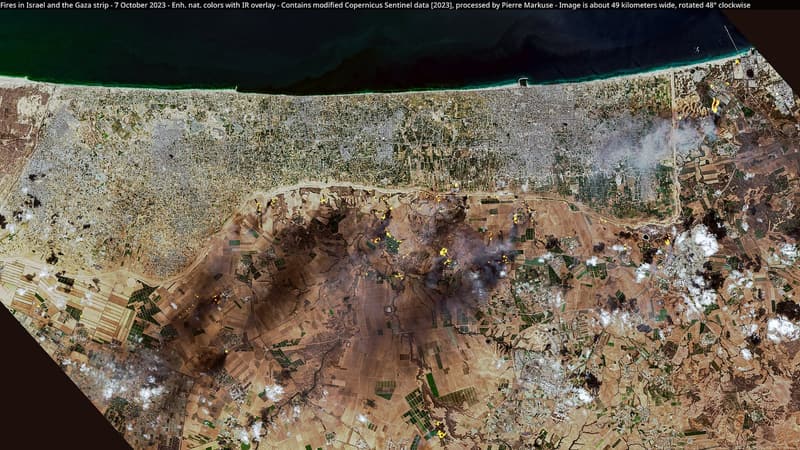
Representative photo · Photo: Pierre Markuse / Wikimedia Commons, CC BY 2.0
Armed Palestinian groups backed by Israel face accusations of participating in a military incursion in central Gaza, raising security concerns.
In the central Gaza Strip, an incident late on Tuesday evening involving unidentified armed individuals has drawn attention to the expanding activities of local factions amidst the broader Palestinian israeli conflict. Several armed men in civilian clothing stopped outside a house sheltering displaced women on ad-Dawa Street in the Nuseirat refugee camp. Carrying light weapons and wearing no military insignia, the individuals surrounded the structure, forced the occupants outside, and questioned them regarding a specific person. After firing into the air and threatening those who hesitated to answer, the gunmen withdrew without making any arrests.
Hours later on Wednesday, the Israeli military initiated a ground operation near the Nuseirat and Bureij refugee camps, west of the line demarcating territory under Israeli control following the October 2025 ceasefire. The incursion led to the closure of Salah al-Din Street and the displacement of approximately 6,000 residents, according to Gaza's Government Media Office. Israel stated that the target was a tunnel threatening its forces, and the operation concluded by Thursday following at least one reported fatality in nearby attacks.
Israeli-backed Palestinian factions are facing accusations of aiding military operations and intimidating civilians in Gaza.
According to a local security source, authorities documented the participation of these armed groups in the central Gaza operation, citing actions that included terrorising civilians and pressuring families to evacuate. The source described these factions as gangs financed and armed by Israel to create internal division. Prime Minister Benjamin Netanyahu has previously defended supporting groups opposed to Hamas, asserting that the policy protects Israeli soldiers.
Political analyst Iyad al-Qarra noted that the reach of these groups has extended from Rafah and Khan Younis to central Gaza and Gaza City. He stated that they assist the Israeli military by gathering intelligence, conducting front-line operations, and carrying out targeted actions while benefiting from aerial protection. Observers estimate the presence of about five main groups with several hundred members, including factions led by Ghassan al-Duhaini, Hussam al-Astal, Shawqi Abu Nuseira, Rami Helles, and Ashraf al-Mansi.
Another analyst, Wesam Afifa, compared the situation to historical precedents such as the South Lebanon Army, suggesting that Israel aims to secure local influence that persists beyond a partial military withdrawal. Unlike previous engagements, these groups are now conducting armed operations and obstructing travelers outside direct military zones, such as at the Rafah border crossing.
Why it matters The expansion of Israeli-backed local militias within the Gaza Strip introduces a new layer of complexity to the region's security dynamics and internal stability. By utilizing these armed factions for front-line tasks, intelligence gathering, and civilian displacement, operations are reshaping control in areas outside direct military access. This development alters the landscape of local governance and humanitarian access, affecting security arrangements and civilian populations as authorities navigate the ongoing consequences of the conflict.
Sources
More like this

Swimming lessons offer Gaza’s children a moment of relief

Spain Frees US-Sought Activist James Chambers on Bail as Irish Police Raid Home
Florida Mechanic Convicted of Murdering British Woman