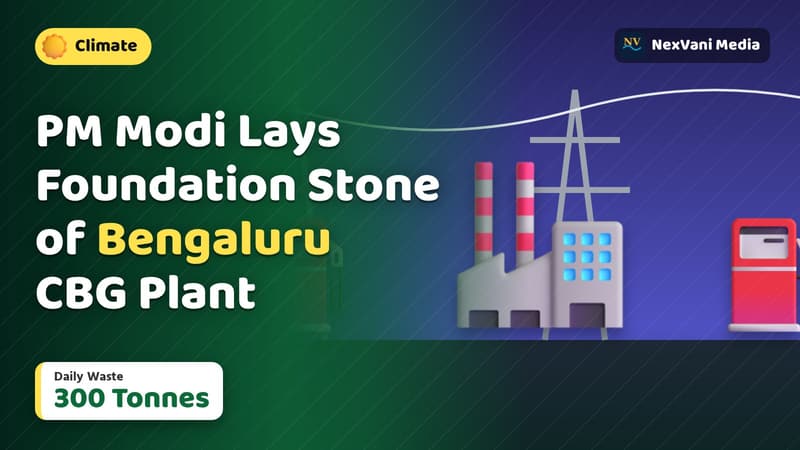
PM Modi Lays Foundation Stone of GAIL’s Bengaluru CBG Plant
Illustration: NexVani Media
Prime Minister Narendra Modi has inaugurated the foundation stone for a new GAIL Compressed Bio-Gas plant in Bengaluru, aimed at advancing sustainable waste management and clean energy.
Prime Minister Narendra Modi recently visited Bengaluru to mark a significant milestone in India’s green energy transition, where he officially performed the ceremony as PM Modi lays foundation stone for a new Compressed Bio-Gas (CBG) facility. The project, spearheaded by GAIL (India) Limited, is designed to transform the city's approach to municipal waste by converting organic refuse into clean fuel and organic manure.
The ceremony was attended by key dignitaries, including Karnataka Governor Dr. Sudha Yadav, Chief Minister D. K. Shivakumar, Minister Krishna Byregowda, and local Member of Parliament Tejaswi Surya. GAIL Chairman and Managing Director Deepak Gupta was also present to represent the organization’s commitment to this waste-to-wealth initiative.
The new Bengaluru CBG plant will process 300 tonnes of organic waste daily into clean energy and manure.
Spanning approximately 18 acres, the facility is engineered to process 300 tonnes of segregated organic municipal waste every day. Once operational, it is expected to produce 12.6 tonnes of CBG and 21.6 tonnes of Fermented Organic Manure daily. The generated fuel will be supplied to GAIL Gas, a subsidiary of the company, to bolster the availability of indigenous alternative energy within Karnataka. The site incorporates advanced odour-control and effluent-treatment systems to ensure environmentally responsible operations.
Advancing India's Bio-Energy Ecosystem
This Bengaluru project is a central component of GAIL’s broader strategy to expand the national CBG infrastructure. The company is currently advancing 10 similar projects across India with a combined production capacity of 154 tonnes per day. By utilizing diverse feedstocks, these facilities aim to reduce reliance on conventional energy sources while creating economic opportunities for local communities, entrepreneurs, and waste management agencies.
In addition to its green energy efforts, GAIL is working to strengthen national energy security through infrastructure upgrades. This includes a major capacity expansion of the 1,427-kilometre Jamnagar-Loni LPG Pipeline, which is being upgraded from 3.25 million metric tonnes per annum to 6.5 million metric tonnes per annum to improve supply connectivity between western and northern India.
Why it matters
The Bengaluru CBG plant addresses the dual challenge of scientific urban waste management and the production of clean, indigenous energy. By diverting organic waste from landfills, the project promotes a circular economy that benefits both the environment and the agricultural sector through the production of organic fertilizer.
This integrated approach serves as a potential model for other Indian cities, fostering investment and employment within the sustainable energy sector. For local residents and stakeholders, the initiative represents a shift toward cleaner urban environments and a more resilient, self-reliant energy infrastructure.
Sources
More like this
Pope Leo XIV demands justice for Amazon defenders in Peru

Huge California waves batter coast and flood streets

Sustainable Travel Gains Ground as Latin America Tackles Overtourism