US Senators Seek Answers on Tokenized Stock Risks
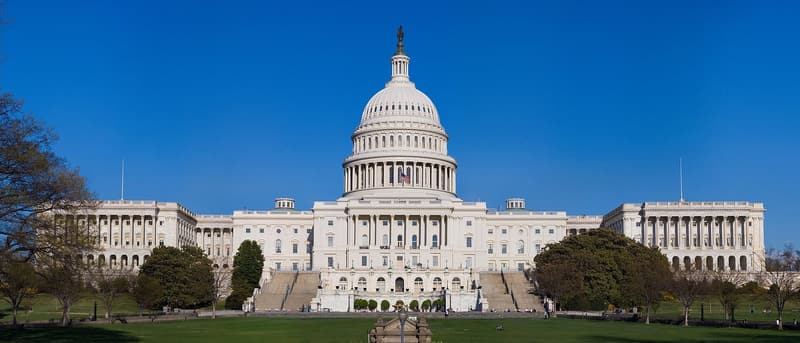
Representative photo · Photo: Noclip / Wikimedia Commons, Public domain
Four Democratic senators have questioned the SEC regarding financial crime safeguards and potential money laundering risks associated with tokenized shares.
This is news, not investment advice. NexVani Media is not a SEBI-registered investment adviser and does not recommend buying or selling any security. Do your own research or consult a registered adviser before investing.
A group of four Democratic senators is pressing the US Securities and Exchange Commission (SEC) to clarify how financial crime safeguards apply to its recent tokenized stock exemption. While some observers might look for Sens seeking alpha in new market structures, lawmakers are focused on the potential for tokenized shares to migrate outside of regulated environments. Senators Angela Alsobrooks, Catherine Cortez Masto, Mark Warner, and Ruben Gallego raised concerns that shares purchased by verified investors could eventually reach offshore or unverified digital wallets.
Concerns regarding Sens seeking alpha and market oversight
In a letter released on Monday, the lawmakers questioned the application of Anti-Money Laundering (AML) and Know Your Customer (KYC) protocols to venues that trade US stocks without registering as traditional securities exchanges. The senators noted that the SEC’s September 17 Innovation Exemption requires venues to manage initial trading access but fails to mandate restrictions on subsequent transfers of those tokens. They have requested that SEC Chair Paul Atkins provide answers to 13 specific questions within 30 days, urging for more transparent rulemaking processes.
Senators are demanding clarity on whether the SEC can freeze or recover tokenized shares moved off-platform.
Beyond money laundering risks, the senators highlighted concerns regarding retail investor protections, including access to best execution and custody safeguards. They also questioned the rights of issuers to object to their stocks being tokenized. This issue has already surfaced in the industry; a public notice from OKXICE—a venture between OKX and the New York Stock Exchange parent company, Intercontinental Exchange—listed 67 companies that have formally objected to having their shares traded on the venue.
While SEC Chair Paul Atkins previously stated that federal anti-fraud and anti-manipulation rules remain in full effect for these exemptions, the lawmakers are seeking further detail on accountability. The inquiry comes as other parts of the digital asset market continue to evolve. For instance, the crypto exchange Backpack recently secured approval from the Commodity Futures Trading Commission (CFTC) to establish a US derivatives exchange using blockchain infrastructure. CFTC Chair Michael Selig emphasized that such operators must adhere to standard regulatory requirements, including market surveillance and customer protection, mirroring the concerns raised by the senators regarding the SEC’s oversight.
Why it matters
The senators' inquiry highlights a growing tension between financial innovation and regulatory oversight. It affects both traditional issuers and retail investors, as it questions the ability of regulators to maintain control over assets once they move beyond the primary trading venue. For the broader market, this underscores the necessity of establishing clear, enforceable standards for digital securities to prevent illicit activity.
Sources
More like this
Bitcoin Short-Term Holders Record Highest Realized Losses Since February

BlackRock Bitcoin ETF ends 11-day outflow streak amid market fear
Optimizely Hack Hijacked Ledger, BBC and 178 Other Sites to Swap Crypto Wallets