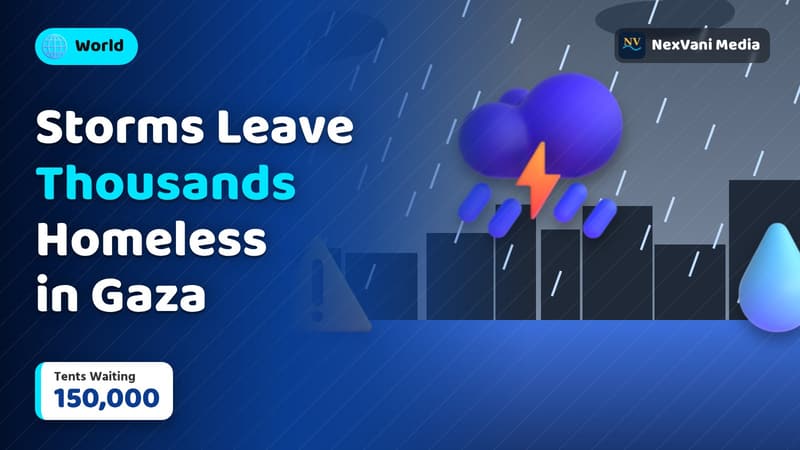
Thousands Left Without Shelter in Storm-Hit Gaza
Illustration: NexVani Media
Deadly weekend storms in Gaza left thousands of displaced Palestinians without shelter as 150,000 tents wait outside the border for Israeli approval.
Recent deadly storms over the weekend have left tens of thousands of Palestinians in waterlogged and damaged tents, compounding the misery for thousands flee gaza displaced populations living in flood-prone areas. At least four individuals, including children and a woman, lost their lives as heavy rains and winds battered fragile and leaky temporary structures. Sanitation infrastructure has also suffered severe damage, causing sewage to spill directly into residential areas and tents.
Aid agencies report that approximately 150,000 new shelters are currently held outside of Gaza, awaiting Israeli authorization to enter. According to the United Nations, around 940,000 people reside in areas at high risk of flooding inside makeshift shelters that lack sufficient protection from heavy rainfall. Pumping facilities designed to clear storm water remain non-operational due to ongoing power shortages.
Over 150,000 tents remain stuck outside Gaza as displaced families face severe storms and freezing conditions.
Humanitarian organizations warn of a rapid rise in health complications, particularly respiratory illnesses linked to cold, damp, and overcrowded conditions. The UK-based charity Medical Aid for Palestinians expressed grave concern that children could face life-threatening hypothermia. Shelterbox noted that emergency items have faced severe restrictions, forcing agencies to rely on makeshift tarpaulins and wooden pallets.
Palestinians are enduring their second winter since a ceasefire was agreed, yet aid workers state that conditions have not improved due to strict regulations on dual-use items and crossing backlogs. The Council for Arab-British Understanding has urged the British government to pressure Israel into easing restrictions and restoring operating licenses for major humanitarian organizations.
Why it matters
The crisis directly impacts hundreds of thousands of vulnerable displaced individuals facing severe weather, heightening the risk of preventable diseases and fatalities. The restriction of humanitarian supplies and shelter materials highlights persistent logistical and political bottlenecks affecting civilian safety in the region.
Sources
More like this
Russia Reports Interception of 146 Drones in Leningrad Region
Spain housing protests: Young citizens pay 500 and more for tiny spaces
Iran Launches First All-Women Military Training Camp Amid Rising Tensions