UK Parliament Report Warns Nation Remains Exposed to Major Polycrisis Threats
Illustration: NexVani Media
A new parliamentary report warns that the UK government is complacent regarding interconnected national threats, urging a shift from siloed planning to a comprehensive resilience strategy.
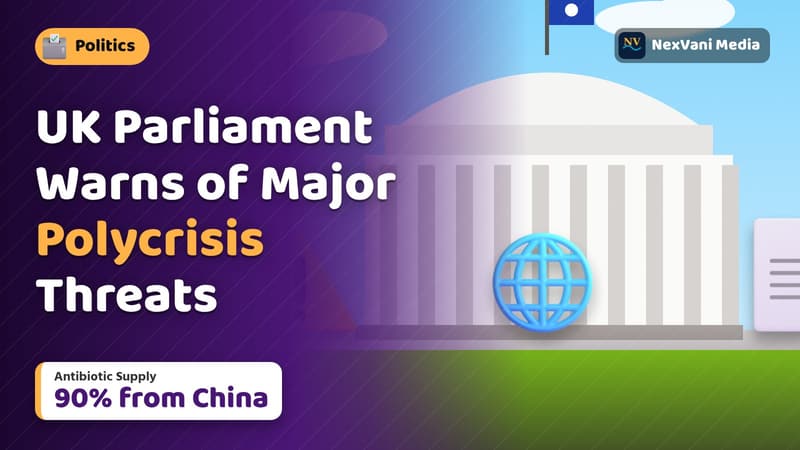
A parliamentary report has warned that the UK is currently exposed to a wide range of interconnected threats, ranging from cyber-attacks and sabotage to climate-related disasters. The findings from the Lords national resilience committee suggest that government ministers have been complacent in addressing these risks, failing to adequately prepare for a potential "polycrisis" where multiple disruptions occur simultaneously.
Addressing the risk of being exposed
While the government recently introduced the "Be Ready" campaign to encourage household preparedness, the committee argues this is insufficient. Current emergency planning is described as fragmented, focusing on individual risks rather than the complex, cascading failures that could arise from modern threats. The report specifically highlights how artificial intelligence is supercharging cyber-attack risks, while critical infrastructure, such as undersea cables, remains vulnerable due to outdated maintenance capabilities.
The UK government must urgently overhaul its fragmented resilience planning to address interconnected national security threats.
Supply chain vulnerabilities are a major concern, particularly regarding food and medicine. The report notes that 90% of the world's 6-APA, the base for penicillin-type antibiotics, is produced in China. Furthermore, the UK’s food supply is highly centralized, with 95% of retail food provided by just nine companies. The committee recommends that the government appoint a dedicated cabinet minister for resilience and provide an annual statement to parliament to ensure transparency and preparedness.
Other recommendations include distributing emergency preparedness booklets to every household, similar to models used in Sweden and Denmark, and creating a national register of volunteers. The committee also advised against plans to phase out the digital terrestrial TV signal, suggesting it remains a vital communication channel during emergencies. A Cabinet Office spokesperson stated that the government would carefully review these recommendations while continuing to invest in national security and pandemic preparedness.
Why it matters
The report underscores a critical shift in how nations must view security, moving away from isolated emergency responses toward a holistic strategy. For the UK, this implies a significant overhaul of how essential services like food, medicine, and digital communications are protected. Given that many essential medical components are manufactured in India and China, these findings highlight the global nature of supply chain risks, which could impact the stability of essential goods for international partners and global markets.
Sources
More like this

UK Government Considers New Appeal Routes for Special Needs Education Reform

Hackney Mayor Accuses Home Office of Free Speech Assault Over Tribune Event
Global Powers Spar Over Next UN Chief as Election Deadline Looms