Wall Street Races to Claim the Onchain Dollar
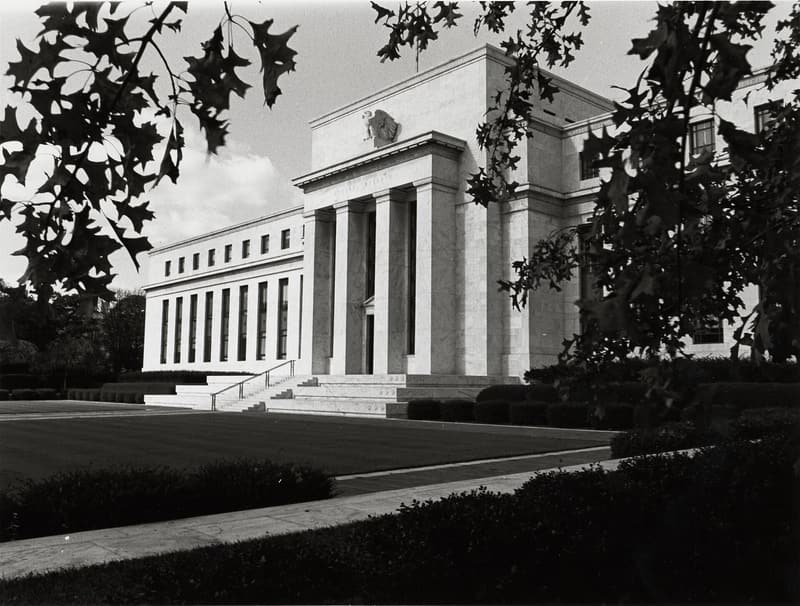
Representative photo · Photo: 颐园居 / Wikimedia Commons, CC BY-SA 4.0
Traditional financial giants are rushing to challenge Tether and Circle for dominance over the growing digital dollar market.
This is news, not investment advice. NexVani Media is not a SEBI-registered investment adviser and does not recommend buying or selling any security. Do your own research or consult a registered adviser before investing.
For years, stablecoins were strictly a cryptocurrency domain, heavily dominated by Tether and Circle while primarily utilized for trading digital assets. That era is coming to a close. Over the past few months, the biggest names in traditional finance have moved en masse to claim a piece of the onchain dollar. This sudden land grab is accelerating fast as institutions figure out how wallet payment works within the evolving financial ecosystem.
The clearest signal of this shift emerged when major banking institutions, including Goldman Sachs, Citigroup, Santander, and Deutsche Bank, committed roughly $270 million to a joint dollar-stablecoin venture known as "Project Faro." This capital funds five years of operations for a U.S.-incorporated issuer targeting a launch in 2027. The initiative represents a 21-institution coalition aiming to challenge Tether and Circle, which currently control about 85 percent of a roughly $290 billion market.
While the consortium continues planning, SoFi has already launched its product. Earlier this month, SoFiUSD expanded onto Polygon alongside Ethereum and Solana, reaching the bank's millions of members. The institution also introduced a tokenized deposit yielding 4.40 percent that converts into SoFiUSD, and it currently settles its entire card program over Mastercard’s network. Meanwhile, Anchorage Digital has positioned itself as a key settlement backbone, with its tokens settling transactions on Visa's network.
Mastercard has emerged as the most aggressive incumbent among payment giants. The company launched a Global Money Platform with acquired stablecoin firm BVNK, rolled out a security tool to screen payments for fraud, and unveiled a system allowing autonomous agents to transact in stablecoins. Visa has similarly expanded its stablecoin settlement program across multiple blockchains, while Circle struck a deal to bring USDC settlement to banking rails in Latin America.
Traditional finance giants are launching a massive race to claim dominance over the onchain dollar.
The Regulatory Catalyst
The primary catalyst driving this transformation is recent legislation. The GENIUS Act, signed in 2025, established the first U.S. framework for dollar-pegged tokens, providing regulated institutions with a clear path into a business they previously watched from the sidelines. The administration has framed these digital tokens as a tool to extend global monetary reach, prompting banks that once dismissed the sector to build out settlement operations.
Why it matters
This aggressive shift transforms the onchain dollar from a niche cryptocurrency asset into contested ground involving Wall Street, major card networks, and established stablecoin issuers. While much of this infrastructure remains in its early stages with bank-issued tokens facing a steep climb to win market share, the underlying direction indicates that the rails governing how money moves are undergoing a fundamental redesign.
Sources
More like this

The potential resurgence of enterprise blockchain technology

Robots Execute AI-Written Code Independently with 92% Success Rate

Britain faces £4 billion grid bottleneck costs as Bitcoin mining eyes wind power