Why Canada is becoming a hub for AI data centres
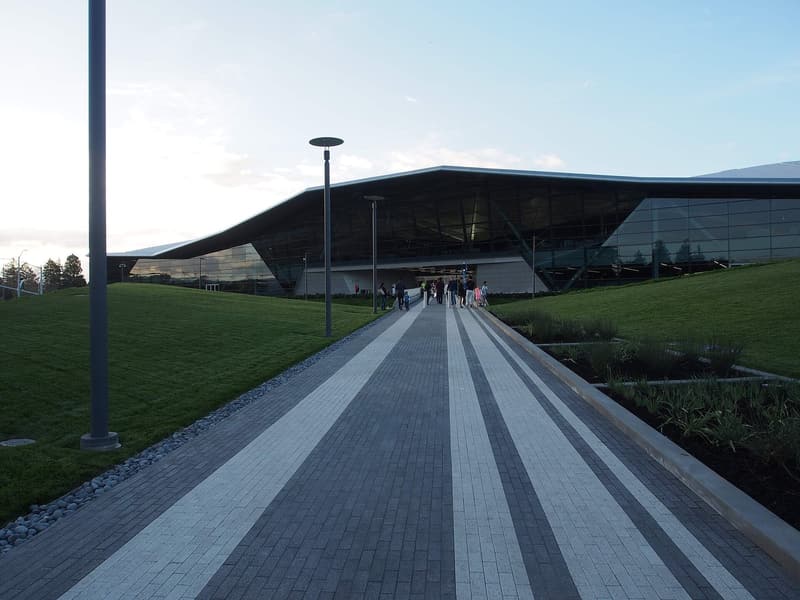
Representative photo · Photo: Galrebix / Wikimedia Commons, CC BY-SA 4.0
As American voters push back against artificial intelligence data centres, investors and leaders are turning their attention north to Canada.
As communities across the United States grow increasingly resistant to artificial intelligence data centre development, industry leaders in Canada are spotting a major opening. While the scale of proposed American projects remains larger, Canada is being heavily promoted as a destination for hyperscale digital infrastructure. Proponents point out that Canada benefits from vast land resources, colder weather, and natural gas supplies, which help mitigate common American issues like noise pollution, proximity to residential areas, and overloaded electrical grids.
This shift in sentiment has been highlighted by political and industry figures. Lucy Hargreaves, CEO of Build Canada, noted that capital originally intended for American sites is now increasingly accessible for Canadian projects. Unlike the intense local opposition seen in the United States, pushback in Canada has generally been quieter, allowing many developments to proceed with minimal disruption and strong legislative backing.
Alberta is at the center of this national surge, accounting for roughly 90 percent of currently proposed locations. The province has positioned itself as a primary destination by offering dedicated investor services to accelerate construction. Among the prominent figures involved is investor Kevin O'Leary, who launched plans for two large facilities named Wonder Valley in Alberta and Utah respectively. While his American site has triggered fierce local resistance and demands for a major downscaling, the Canadian counterpart has enjoyed enthusiastic support from local and provincial authorities.
Canada is attracting AI data centre investments as the United States faces growing local opposition.
The 7,000-acre Alberta Wonder Valley project relies on an off-grid natural gas power system. Although the provincial government exempted the facility from a standard environmental impact assessment, it still requires proper permits before construction can begin. Local leaders have welcomed the industrial development for bringing economic opportunities to a resource-rich rural area. However, some residents have voiced concerns over projected water consumption levels for cooling purposes, and Sturgeon Lake Cree Nation has launched a legal challenge against the government's decision to bypass the environmental assessment.
Why Canada matters for global AI infrastructure
This divergence in public sentiment between North American neighbors highlights how local regulations, energy resources, and community pushback can reshape the global technology landscape. As the United States grapples with resistance to massive energy-intensive digital projects, regions with abundant natural gas and receptive local governments like Alberta are well-positioned to capture significant capital investments.
Sources
More like this

UK Secures Tens Of Thousands Of Fridges In Secret Anti-Hacker Operation
California Probes Nvidia Over Potential China Technology Transfers

US Approved Exports of Nearly 900,000 AI Chips to China Over Six Months