Bitcoin Mining Decentralization Faces Hurdles Over Smallest Bitcoin Amount Payouts
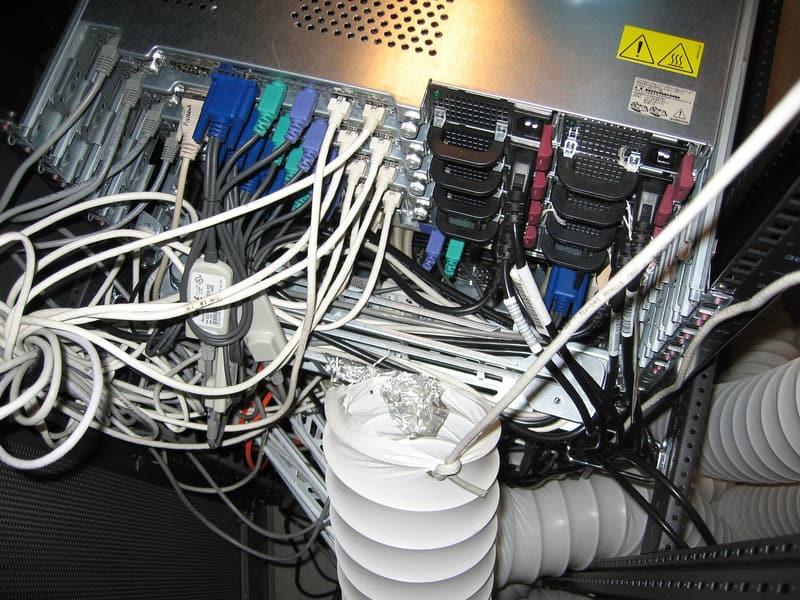
Representative photo · Photo: Jemimus / Wikimedia Commons, CC BY 2.0
Bitcoin's push for decentralized mining is battling a long-standing payout issue that limits rewards for smaller operators, prompting new solutions.
This is news, not investment advice. NexVani Media is not a SEBI-registered investment adviser and does not recommend buying or selling any security. Do your own research or consult a registered adviser before investing.
The quest to decentralize Bitcoin mining is hitting a decade-old technical barrier that complicates how smaller operators receive rewards. While the network aims to distribute power, the smallest Bitcoin amount that can be efficiently processed remains a significant hurdle for decentralized pools.
A recent analysis of 2,545 blocks mined by the early decentralized pool P2Pool revealed that in July 2014, none of the 15,865 recorded payouts were below 0.001 BTC. These findings, highlighted by Bitcoin Optech on Nov. 20, underscore a persistent constraint in the network's architecture. Unlike centralized pools that manage internal ledgers, P2Pool distributed rewards directly via coinbase transactions, which are part of the block reward itself. Because each payout requires a unique transaction output, block space limitations and firmware restrictions force a cap on how many miners can be paid directly.
Addressing the smallest bitcoin amount constraint
To manage these limitations, the original P2Pool system increased the difficulty requirements for mining shares whenever a participant’s expected payout fell below the 0.001 BTC threshold. This design choice meant that smaller miners qualified for shares less frequently, making their income streams unpredictable.
Decentralized mining pools struggle to pay small operators directly due to block space and transaction output limits.
To overcome this, the P2Poolv2 project is exploring a share market model. Under this proposed system, smaller miners would sell their mining shares to intermediaries rather than waiting for direct coinbase rewards. These buyers, who would aggregate shares to qualify for larger, direct payouts, would assume the risk of future block rewards in exchange for a discounted price. While this offers smaller miners a path to more frequent payments, it introduces new dependencies, as miners must find buyers willing to purchase their shares before they expire. Furthermore, developers have cautioned that larger miners might attempt to exploit the system by splitting their hash power into multiple identities to monopolize limited direct payout slots.
Why it matters
This development highlights the ongoing struggle to balance decentralization with technical efficiency. The success of the P2Poolv2 marketplace is critical, as it will determine whether the network can support smaller miners without centralizing reward distribution among large-scale operators. For those involved in the ecosystem, this evolution represents a necessary step in refining how mining rewards are distributed at scale.
Sources
More like this
Bitcoin ETFs shed $1.8B in third-largest weekly outflow

BlackRock Ethereum ETF Inventory and Redemptions Update
Bitcoin Core Patches Node Bug in 30.5 and 31.3