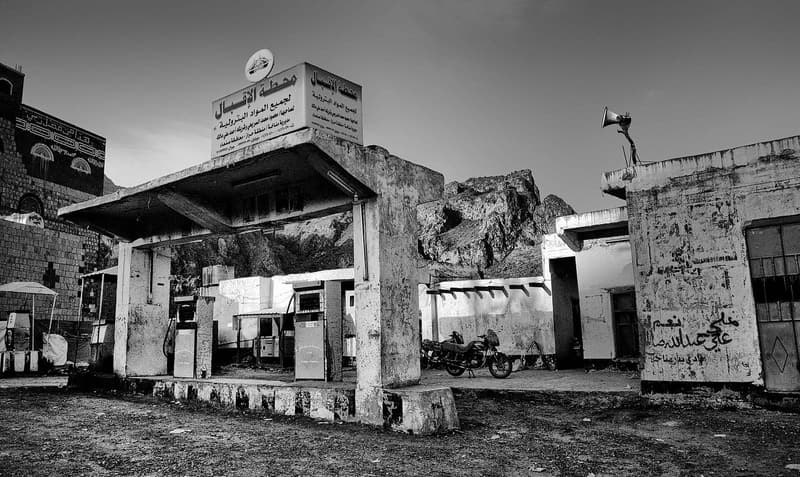
Contaminated Petrol Crisis Hits Drivers in Sanaa
Representative photo · Photo: Rod Waddington from Kergunyah, Australia / Wikimedia Commons, CC BY-SA 2.0
Drivers in Yemen are facing severe vehicle damage and rising costs due to the prevalence of contaminated petrol in Houthi-controlled regions.
Motorists in Sanaa are struggling with the consequences of contaminated petrol, a term referring to fuel mixed with oil and impurities that can cause significant vehicle damage. Drivers report that their engines vibrate and lose power shortly after refueling, leading to costly mechanical failures and extended travel times. For many, the situation has become a financial burden that compounds the daily hardships of life in a country impacted by a decade of conflict.
Yazan, a 28-year-old driver, recently experienced these issues firsthand during a trip from Sanaa to Ibb. What should have been a two-and-a-half-hour drive turned into a six-hour ordeal as his vehicle struggled to accelerate and required multiple stops. He noted that the fuel he purchased in the capital was clearly substandard, causing his engine to vibrate aggressively.
Contaminated fuel is causing widespread engine damage and financial strain for drivers in Houthi-controlled Yemen.
The origins of this fuel quality crisis remain a subject of intense debate. The Sanaa-based Yemen Petroleum Company (YPC), managed by the Houthis, has attributed the issue to damaged storage facilities in Hodeidah and the Ras Isa oil terminal. These sites have been targeted by air strikes since 2024, which the YPC claims has prevented them from properly filtering impurities out of the fuel supply. Conversely, the Sana’a Center for Strategic Studies suggests that import restrictions have forced a reliance on lower-quality Iranian fuel, while academic Mohammed Ansi has criticized the lack of oversight, alleging that profit-driven motives are overriding public welfare.
The Financial Toll on Yemeni Families
Beyond the mechanical damage, drivers are facing sharp price hikes. The cost of 20 liters of petrol has increased by 20 percent recently, rising from 9,500 to 11,400 Yemeni riyals. This financial pressure is exacerbated by the need for expensive repairs. Akram Naji, a local taxi driver, recently spent 55,000 riyals—roughly $100—to fix a faulty fuel pump and clogged injectors. To cover these costs, Naji had to sacrifice his rent payments and reduce his family's daily expenses. With the World Bank noting a significant drop in fuel imports this year and the IMF reporting a decline in per capita income, the crisis is pushing more residents toward a state of humanitarian vulnerability.
Why it matters
The ongoing fuel crisis represents a direct threat to the livelihoods of Yemeni citizens, particularly those in the transport sector. As vehicle maintenance costs rise and fuel quality remains unreliable, families are forced to choose between basic needs and the repairs required to keep their vehicles operational.
Sources
More like this
Gaza Civil Defence Struggles to Rescue Lives as Vehicles Break Down

Woman Convicted of Murdering Elderly Parents with Insulin

China issues Mount Fuji warning as family of missing climber offers reward