Black Sea Marine Life Faces Devastation Amid Conflict And Deaths Russia Ukraine War
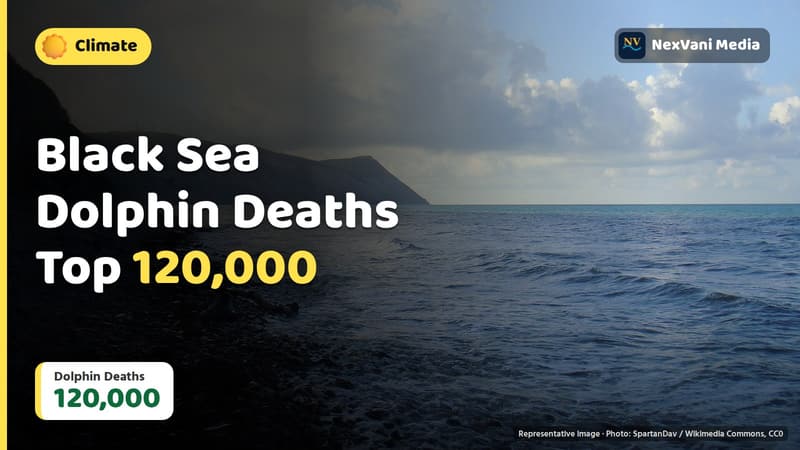
Representative image · Photo: SpartanDav / Wikimedia Commons, CC0
The ongoing conflict in the region has caused catastrophic environmental damage, wiping out over 120,000 dolphins and severely harming the marine ecosystem.
The ongoing hostilities following Moscow's 2022 full-scale invasion have taken a severe toll on the marine environment, bringing widespread devastation to the Black Sea. While fishing and poaching in littoral nations declined significantly due to the conflict, military activities have driven up cetacean mortality rates immensely. According to researchers, the conflict has killed hundreds of times more bottlenose dolphins, short-beaked dolphins, and harbour porpoises.
In 2022 alone, approximately 50,000 cetaceans died, and by 2026, total casualties surpassed 120,000, representing nearly one in four cetaceans in the sea. This spike in deaths russia ukraine war highlights the severe ecological cost of military operations. Explosions, cruise missile launches, and military sonar systems disrupt the creatures' echolocation, destroying their primary tools for navigation, communication, and hunting.
The Impact of Noise and Pollution on Apex Predators
Deprived of their ability to hunt effectively, affected animals rapidly lose weight and resort to consuming their own blubber. Because this tissue has accumulated agricultural runoff, microplastics, and heavy metals, the self-consumption triggers widespread poisoning. Their compromised immune systems then succumb to lethal respiratory infections caused by morbillivirus. Additional pressure stems from environmental disasters such as the 2023 Kakhovka dam destruction, which released enormous volumes of contaminated water filled with fertilizers and heavy metals.
The ongoing conflict has devastated marine life, killing more than 120,000 dolphins in the Black Sea ecosystem.
Environmental researchers from Bulgaria, Romania, and Turkiye have similarly observed increased strandings, though advanced decomposition often conceals exact causes. Meanwhile, Russian monitors have attributed the fatalities to natural parasites and viruses.
Why it matters
The catastrophic ecological destruction highlights how modern military conflicts extend far beyond human casualties, fundamentally altering regional biodiversity. The decimation of apex predators disrupts the entire marine food chain, threatening long-term environmental stability across littoral nations.
Sources
More like this
Endangered rare damselfly spotted at restored River Ash site

Environmental Campaigners Stage Halloween Protest Outside bute house edinburgh

Chancellor Healey to Veto Offshore Wind Projects Not Lowering Bills