Climate
Delhi AQI: Air Quality Remains Poor Despite Marginal Improvement
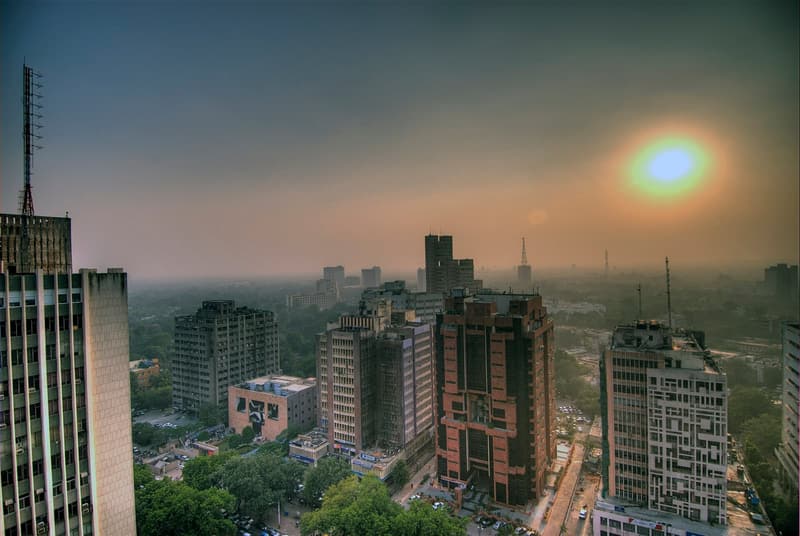
Representative photo · Photo: wili hybrid Original uploader was Lokant / Wikimedia Commons, CC BY 2.0
Representative photo · Photo: wili hybrid Original uploader was Lokant / Wikimedia Commons, CC BY 2.0
Delhi's air quality saw a slight improvement on Friday morning as the overall AQI reached 271, though most monitoring stations continue to report poor conditions.
Delhi's air quality saw a minor improvement on Friday morning, yet the city continues to grapple with pollution levels that remain in the 'poor' category. According to the latest readings at 5 am, the Delhi AQI today was recorded at 271. This figure represents a slight decrease of six points compared to the same time on Thursday, when the index stood at 277. While the overall air quality has shifted marginally, the atmosphere across the capital remains a significant concern for residents.
Out of the 59 air quality monitoring stations across the city, 57 provided data for the latest update. The analysis indicates that PM2.5 remains the primary pollutant, affecting 47 of these locations. The distribution of air quality levels shows that 41 stations are currently classified as 'poor,' while 13 stations have recorded 'very poor' air quality. Only three stations managed to reach the 'moderate' category, and two stations were not reporting data.
Certain parts of the city are experiencing significantly higher levels of pollutants. Sirifort recorded the highest index value at 351, followed closely by JNU at 342 and Pusa at 341. Additionally, both Chandni Chowk and NSUT Jaffarpur reported an AQI of 331. These five specific locations have all fallen into the 'very poor' category, highlighting localized pollution hotspots that continue to exceed the city-wide average.
Delhi's air quality remains in the poor category with an AQI of 271 and PM2.5 as the primary pollutant.
The persistence of poor air quality in the capital significantly impacts the daily lives and health of millions of residents. With the majority of monitoring stations reporting poor or very poor air quality, the ongoing reliance on PM2.5 levels as a primary indicator underscores the sustained environmental challenge facing the region. This situation necessitates continued vigilance from authorities and the public as the city struggles to maintain healthier air standards.