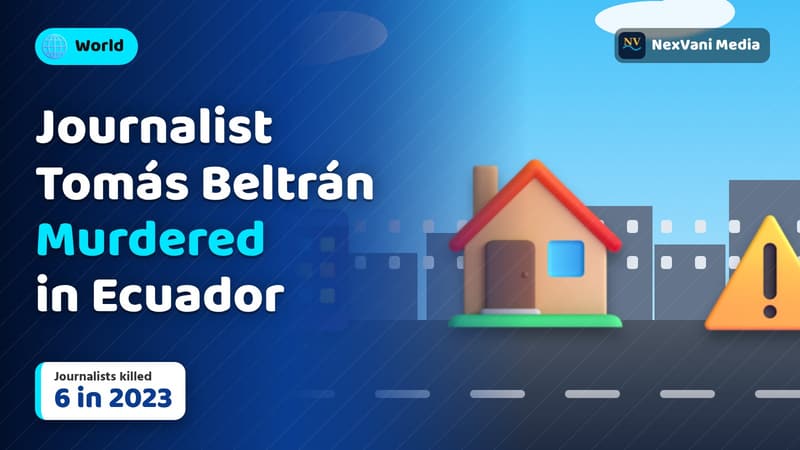
Journalist Murdered in Ecuador Amid Escalating Gang Violence
Illustration: NexVani Media
The killing of journalist Tomás Beltrán in Manabí highlights the severe risks facing media professionals in an increasingly dangerous Ecuador.
The recent murder of journalist Tomás Beltrán has brought renewed attention to the deteriorating state of press freedom in Ecuador. Beltrán was shot dead on Sunday night while parking his car at his home in Calceta, a city located in the province of Manabí. As citizens search for updates on the Ecuador killing news, the incident serves as a grim reminder of the country's transformation from a relatively stable nation into a hotspot for organized crime and violence.
Beltrán operated a Facebook page providing local news updates for Calceta, a region situated along the Pacific coast that has become a central point for drug trafficking routes. While authorities have provided little information regarding the identity of the perpetrators, who fled the scene armed, the incident has sparked widespread concern among advocacy groups. Although investigators have not confirmed a direct link to his reporting, Beltrán had previously documented allegations of corruption involving local officials.
The murder of Tomás Beltrán highlights the extreme dangers facing journalists in volatile regions of Ecuador.
A climate of fear for the press
Organizations like Reporters Without Borders have noted that Beltrán had previously expressed fears for his safety and had been enrolled in a government-run protection program. The status of this protection at the time of his death remains unclear. Artur Romeu, the Latin America director for Reporters Without Borders, has urged the public prosecutor’s office to prioritize an investigation into whether the killing was motivated by his journalistic work.
The situation for media workers in the country has become increasingly dire. According to the organization Fundación Periodistas Sin Cadenas (FPSC), at least 19 journalists have been forced into exile since 2023. María Fernanda Almeida, a project coordinator at FPSC, stated that practicing journalism in the country is now an extremely high-risk profession. Last year alone, six journalists were killed, and these cases remain largely unpunished. This environment has led to widespread self-censorship, particularly in coastal provinces where reporters are increasingly hesitant to cover gang-related violence.
Journalists have frequently reported receiving death threats, often accompanied by photos of their homes and personal details about their families. Furthermore, the government of President Daniel Noboa has faced criticism for its aggressive approach to security. Human rights groups have raised concerns over the frequent declaration of states of emergency and the expanded role of the military, which has led to reports of journalists being harassed or having their equipment confiscated while covering operations.
Why it matters
The killing of Beltrán underscores the lethal risks associated with reporting on drug trafficking and corruption in Ecuador. As the nation grapples with its role as a major hub for illicit trade, the silencing of independent voices threatens the public's right to information and emboldens criminal networks.
Sources
More like this
US Flight Ground Stop Causes Frustrating Travel Chaos
US bound flights from Australia delayed following telecommunications outage

Tanker collision leaves riverboat passengers clinging to railings in New Orleans