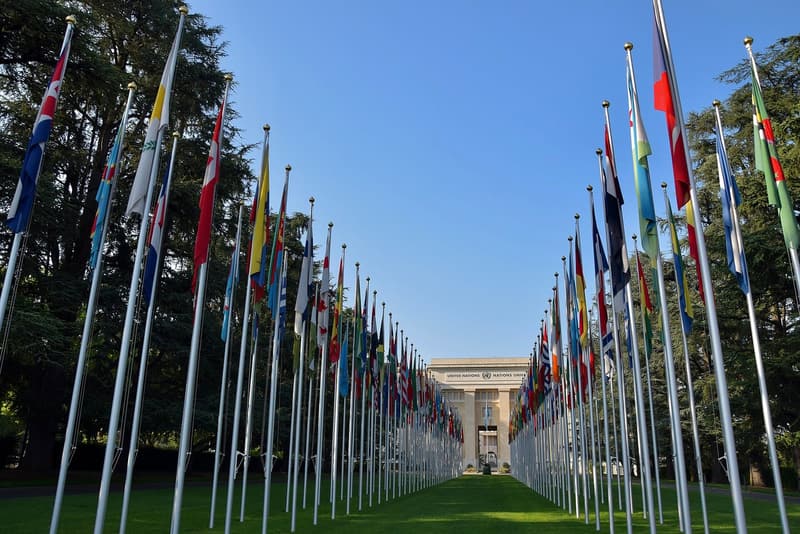
Anthony Albanese Faces Criticism Over Fossil Fuel Omission at COP31 Summit
Representative photo · Photo: Ank gsx / Wikimedia Commons, CC BY-SA 4.0
Australian Prime Minister Anthony Albanese touted renewable energy successes at the UN climate summit but faced backlash for failing to address the nation's significant coal and gas industry.
Australian Prime Minister Anthony Albanese addressed the United Nations climate summit in Antalya, Turkey, this week, emphasizing a "solemn responsibility" to combat climate change. While Anthony Albanese highlighted his nation's progress in renewable energy, including a doubling of generation capacity over six years and the growth of solar markets, his speech was notably devoid of any mention of fossil fuels. This omission drew immediate criticism from observers, particularly given Australia's status as a major global exporter of coal and liquefied natural gas.
Anthony Albanese Under Scrutiny
Moments before the Prime Minister took the stage, UN Secretary-General Antonio Guterres delivered a stark warning to world leaders. Guterres stated clearly that achieving the 1.5C global temperature goal requires an immediate halt to new coal projects, noting that developed nations cannot continue to expand fossil fuel production while claiming climate commitment. He urged governments to implement credible roadmaps to transition away from fossil fuels, emphasizing that coal power must be reduced by 75% by 2035.
Critics were quick to contrast the Secretary-General's message with the Prime Minister's address. Adam Bandt, chief executive of the Australian Conservation Foundation, described the speech as a missed opportunity and a "snub" to the call for transparency regarding fossil fuel expansion. Similarly, veteran climate analyst Bill Hare noted that it was "disturbing" that the leader of a major fossil fuel exporter failed to outline a pathway for transitioning away from these energy sources, pointing out that the current government has approved 38 fossil fuel projects since 2022.
Australia faces international pressure to address its massive coal and gas exports during climate negotiations.
While the summit featured cultural performances and discussions on multilateral action, the tension regarding the role of coal remained a central theme. Australia and Turkey are currently advocating for a global target to increase final-use energy derived from electricity to 35% by 2035. However, the lack of a clear commitment to phase out fossil fuel production continues to be a point of contention for activists and international observers who argue that Australia's domestic policies contradict its stated climate ambitions.
Why it matters
The failure to address fossil fuel production at a major international summit highlights the ongoing tension between national economic interests and global climate targets. For international stakeholders, this signifies that major exporters are struggling to reconcile their reliance on coal and gas with the urgent need to limit global warming to 1.5C.
This debate impacts the global transition to clean energy, as the lack of clear phase-out plans from major producers can hinder collective efforts to stabilize temperatures. For those in the Pacific and beyond, the pace of this transition is critical for long-term climate security.
Sources
More like this
UN Chief Antonio Guterres Urges Immediate Action at Climate Summit

Understanding What Cold Weather Payments Mean for Heating Costs

Gaza Infrastructure Collapses Under Heavy Rains and Floods