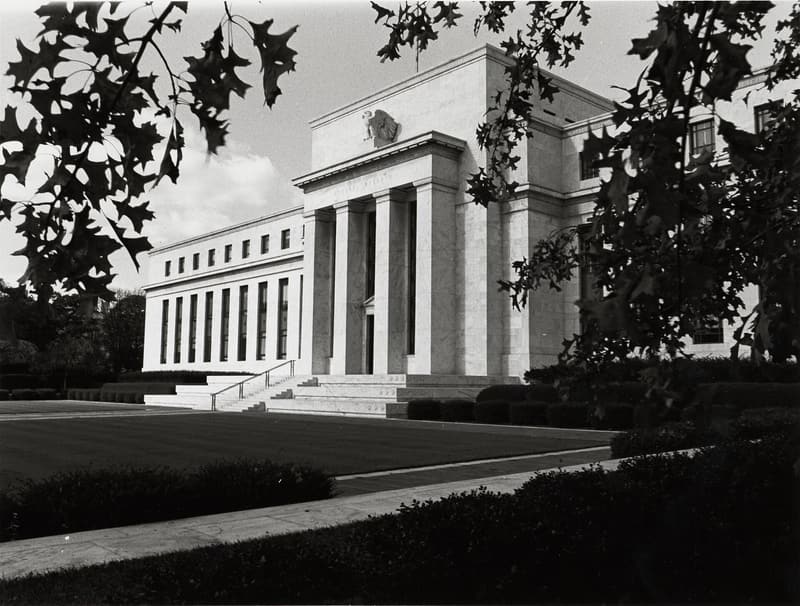
Fed's Christopher Waller Advocates for 50-Basis-Point Rate Hike in December
Representative photo · Photo: Federalreserve / Wikimedia Commons, Public domain
Federal Reserve Governor Christopher Waller suggests a 50-basis-point rate hike is necessary to combat persistent inflation, while also discussing the role of traditional banks in blockchain finance.
This is news, not investment advice. NexVani Media is not a SEBI-registered investment adviser and does not recommend buying or selling any security. Do your own research or consult a registered adviser before investing.
Federal Reserve Governor Christopher Waller has signaled that the central bank may need to adopt a more aggressive monetary policy to address stubborn inflation. During a recent CNBC interview, the official discussed how Fed's Waller comments reflect a growing concern that current price pressures could become entrenched if the bank does not act decisively. Waller suggested that a 50-basis-point increase in interest rates during the December meeting might be required to ensure inflation returns to the Fed's 2% target.
Fed's Waller on Inflation Strategy
Waller noted that the central bank must prevent businesses and consumers from viewing annual inflation near 3% as a permanent fixture. He argued that a half-percentage-point hike would serve as a necessary shock to the system, whereas a smaller 25-basis-point move could potentially undermine the credibility of the Fed. This stance follows three consecutive months of core consumer price increases at a 0.3% pace, which exceeds the Fed's long-term objectives. While market participants currently favor a smaller 25-basis-point increase, Waller emphasized that timing and clear communication are critical when inflation expectations are at risk.
Federal Reserve Governor Christopher Waller advocates for a 50-basis-point rate hike to combat persistent inflation pressures.
Blockchain and Traditional Finance
In a separate address at The Clearing House Annual Conference, Waller explored the integration of tokenized assets into the financial landscape. He acknowledged that blockchain technology and programmable transactions could allow for 24/7 securities trading and more efficient settlement processes. However, he maintained that established financial institutions remain vital. Waller argued that while central bank money does not need to be used in every digital transaction, its presence remains a foundational requirement for a stable financial system. He rejected the notion that blockchain innovation renders traditional payment infrastructure obsolete, suggesting instead that the two must work in tandem.
Why it matters
Waller's hawkish outlook on interest rates suggests that borrowing costs may remain elevated longer than some investors anticipate. This environment typically pressures speculative assets, including cryptocurrencies, as higher rates make traditional interest-bearing investments more attractive.
For the broader financial ecosystem, the push for higher rates combined with a cautious approach to blockchain adoption indicates that regulators prioritize stability. As traditional banks integrate digital assets, the reliance on established settlement systems ensures that innovation occurs within a regulated framework.
Sources
More like this

MARA Holdings Prices $185M Debt Offering Following $1.1B Bitcoin Sale

Analyst: Bitcoin Below $70,000 Is a Market Gift

German Court Proposes Dismissing Movie2k Case for 40,000 Bitcoin