House Oversight Weighs Bans on Officials Using Prediction Markets
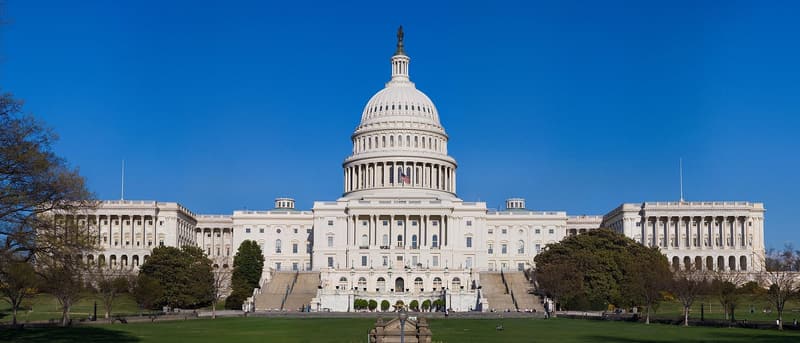
Representative photo · Photo: Noclip / Wikimedia Commons, Public domain
A House Oversight memo recommends Congress consider banning federal personnel from betting on prediction platforms over insider trading concerns.
This is news, not investment advice. NexVani Media is not a SEBI-registered investment adviser and does not recommend buying or selling any security. Do your own research or consult a registered adviser before investing.
The leadership of the House Oversight Committee is examining potential prohibitions preventing government employees from placing wagers on prediction platforms. This follows an investigation into personnel leveraging nonpublic information for financial gain on services like Kalshi and Polymarket. In a staff memorandum published recently, the committee outlined findings from a probe into alleged insider trading by public servants, military members, and security clearance holders. While some might wonder whether the government should regulate AI or other emerging sectors, lawmakers here are strictly focused on wagering activity.
Investigators accumulated nearly 1,700 pages of records and conducted five bipartisan staff briefings with prediction market operators regarding their methods for tracking unusual transactions. Committee Chairman James Comer emphasized that preserving public integrity remains paramount. He noted that citizens rightly worry about potential corruption and that Congress holds a responsibility to ensure existing rules adequately block insider trading and stop officials from profiting using restricted data.
The core proposal within the memorandum suggests that lawmakers evaluate new restrictions on federal staff. Potential measures range from a complete prohibition on participating in prediction markets to targeted limitations concerning specific contracts tied directly to government choices. Applying these standards across all branches would underline the principle that state employees should not derive financial advantage from privileged access.
The committee noted that current insider trading regulations already extend to prediction markets. Statutes such as the Commodity Exchange Act, amended through the STOCK Act, forbid federal workers, lawmakers, and others from trading options, swaps, or commodity futures utilizing confidential knowledge. Furthermore, the report credited prediction platforms for actively policing their own environments, highlighting that most suspicious incidents were initially flagged by operators like Polymarket and Kalshi.
Scrutiny over the sector has grown following recent enforcement actions. In April, a U.S. soldier faced charges over alleged bets connected to a military mission resulting in the capture of Venezuelan President Nicolas Maduro. Later in August, the Commodity Futures Trading Commission penalized a former White House staffer for wagering on presidential addresses. The push also coincides with broader regulatory attention from the CFTC and incoming legislative leaders.
House Oversight recommends Congress weigh banning federal officials from betting on prediction markets.
Why it matters
This parliamentary review highlights ongoing concerns regarding ethics and conflicts of interest among public servants handling sensitive state data. Evaluating stricter limits on platforms like Kalshi and Polymarket could reshape accountability standards for government employees across multiple branches.
Sources
More like this

Joe Carlasare Discusses Market Sentiment and Bitcoin Outlook
Kraken Parent Payward Gains Market Share as Slower Trading Weighs on Earnings
US Regulators Advance Crypto Trust Charters Amid Growing Senate Scrutiny