India Opposes UN Draft Resolution Amid Tense India Turkey Relations
Illustration: NexVani Media
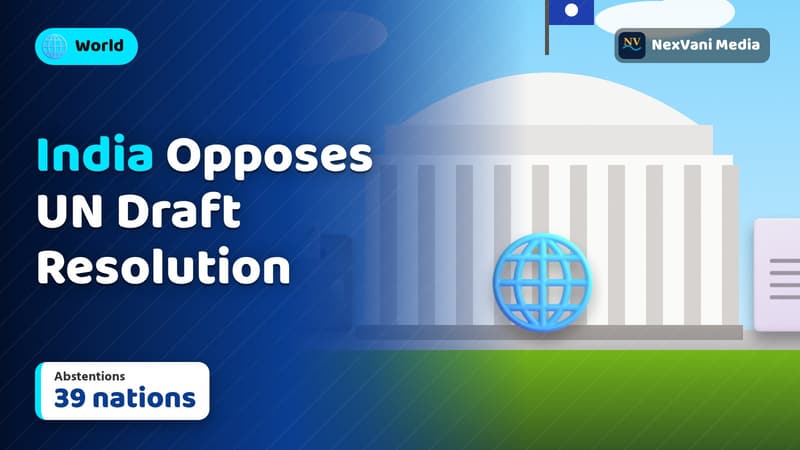
India has formally voted against a recent UN General Assembly draft resolution, highlighting ongoing diplomatic frictions in the context of India Turkey relations.
The United Nations General Assembly recently passed a draft resolution during a session held on Monday, drawing attention to shifting international alliances and diplomatic tensions. While the resolution secured a significant majority, the proceedings were marked by a notable dissent from India, which voted against the measure. This development has brought renewed focus to the complexities surrounding India Turkey relations, as the two nations navigate differing positions on global policy matters.
Understanding India Turkey Relations
The draft resolution received support from 112 member states, while 39 nations chose to abstain from the process. Alongside India, a small group of countries including Armenia, Cyprus, Greece, Israel, and the United States also cast votes against the resolution. The decision by India to oppose the draft underscores the country's strategic stance within the United Nations framework and its willingness to diverge from broader consensus when national interests or diplomatic principles are perceived to be at stake.
India voted against a UN General Assembly draft resolution, signaling a firm stance on international policy issues.
This diplomatic maneuver reflects the broader challenges inherent in maintaining consistent India Turkey relations on the world stage. As global geopolitical dynamics continue to evolve, the voting patterns at the UN serve as a barometer for how nations align themselves on controversial or sensitive international topics. The participation of major global players in the opposition bloc highlights the divisive nature of the resolution and the varied strategic priorities currently influencing member states.
Why it matters
The outcome of this vote is significant as it demonstrates the current fractures within international diplomatic circles. For stakeholders observing India Turkey relations, this event serves as a reminder of the underlying tensions that often influence bilateral and multilateral engagements. The decision affects how India positions itself in future UN negotiations and may impact its diplomatic standing among nations that supported the resolution.
Sources
More like this

Police officer who was a master manipulator faces early release from prison

Afghan Women Defy Taliban Restrictions to Pursue Ambitions in Secret
Bilkis Bano Heartbroken After Two Convicts in 2002 Gang-Rape Case Granted Bail