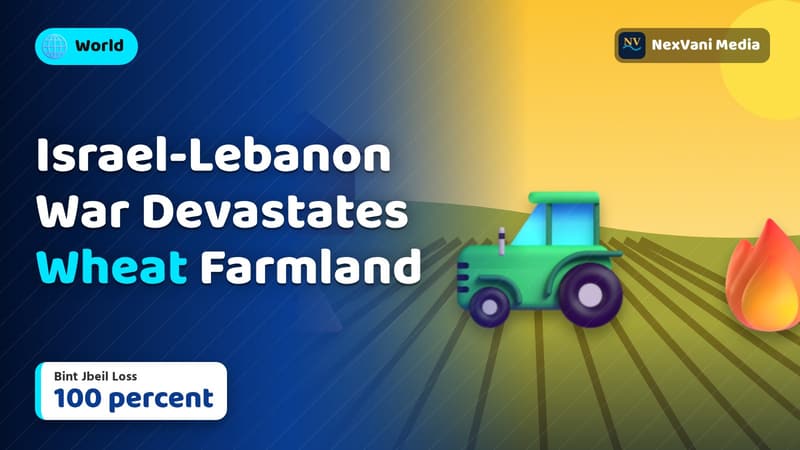
Israel-Lebanon war impacts wheat production and agricultural ecosystems
Illustration: NexVani Media
Ongoing conflict between Israel and Lebanon has devastated farmland, significantly reducing wheat production and threatening the livelihoods of local farmers.
The ongoing Israel-Lebanon war has caused extensive damage to Lebanon’s agricultural sector, specifically targeting wheat production in the southern regions and the Bekaa Valley. As the Israel-Lebanon conflict continues to escalate, experts warn that the destruction of critical infrastructure and farmland is creating long-term ecological damage that threatens the country's food security and the future of its rural communities.
The impact of the Israel-Lebanon war on agriculture
Recent data from researchers at Lebanon’s National Council for Scientific Research indicates that wheat-growing areas have suffered severe losses. In the 2024-2025 season, the south experienced a 61 percent loss in wheat-growing areas, while the Bekaa plain—which accounts for the majority of the nation's production—saw a 57 percent decline. In specific border towns like Bint Jbeil, reports suggest that 100 percent of cropland has been destroyed, with significant damage also recorded in the Baalbeck district.
Munira Khayyat, author of A Landscape of War, noted that these military actions are disrupting entire ecosystems. The use of munitions, including white phosphorus in southern areas, has raised concerns about soil sterility and the potential for long-term desertification. Experts suggest that these actions effectively weaken the land's capacity to sustain life, making it difficult for farmers to return to their fields even after hostilities conclude.
The Israel-Lebanon war has caused severe destruction to farmland, threatening local food production and farmer livelihoods.
While the Russian-Ukrainian war had previously incentivized Lebanese farmers to expand wheat cultivation due to rising international prices and the depreciation of the local currency, these gains have been reversed. The proportion of fallow land has risen from 9 percent to 24 percent since 2023. Food security expert Elias Ghadban noted that while the national-level impact on wheat supply may not be catastrophic, the local consequences for farmers who have lost their primary source of income are devastating. The crisis is compounded by a rising cost of living that has outpaced salary growth, leaving many families in a precarious economic position.
Why it matters
The destruction of Lebanese farmland represents a significant blow to the country’s agricultural resilience. For small-scale farmers in the south, the loss of land is not merely an economic setback but an existential crisis that threatens to break the long-standing connection between these communities and their ancestral soil.
Sources
More like this

Inside Denmark: The Legal Battle Over 'Parallel Societies' Housing Laws
Concerns grow over the effectiveness of the AIIB Project Complaints Mechanism

US Treasury Secretary Scott Bessent Relocated Amid Bessent Iran Security Threats