NASA Voyager 1 Reaches Historic Milestone of One Light-Day from Earth
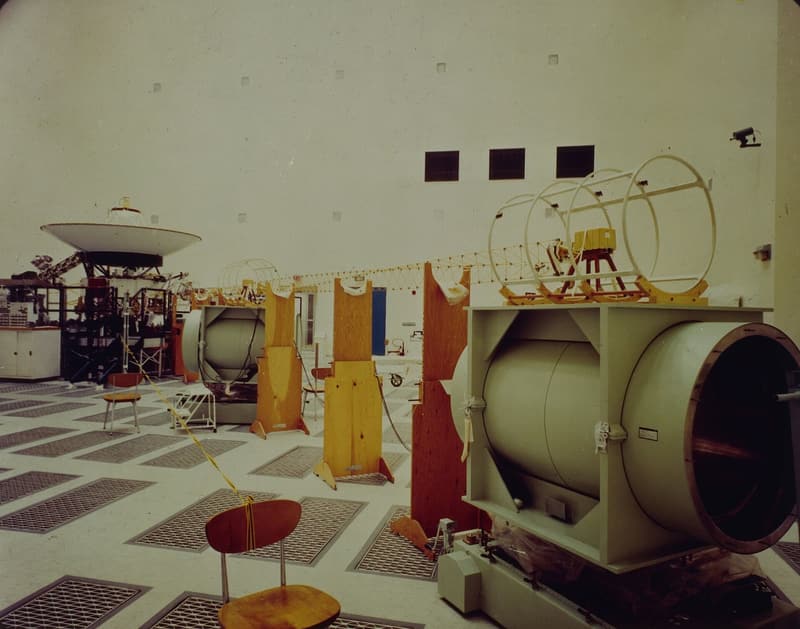
Representative photo · Photo: NASA/JPL / Wikimedia Commons, Public domain
NASA's Voyager 1 probe is set to become the first human-made object to travel one light-day away from Earth, marking a significant achievement in space exploration.
The iconic NASA Voyager 1 space probe is poised to achieve a remarkable milestone in human history. On Wednesday, the robotic explorer will reach a distance of one light-day from Earth, signifying that it has traveled at least 16 billion miles since its launch in 1977. This distance represents the span that light covers in a 24-hour period. As the probe continues its journey through the vast, empty expanse of interstellar space, it maintains its status as the most distant human-made object in existence.
Understanding the NASA Voyager 1 journey
Launched shortly before its sibling, Voyager 2, the plutonium-powered craft completed its primary planetary mission with a flyby of Saturn in 1980. Currently, the probe is traveling at approximately 36,000 miles per hour. Despite the immense distance, the mission remains active, with a dedicated team of engineers at NASA providing commands on a weekly basis, or more frequently should technical issues arise. The team is currently investigating a brief loss of communication that occurred in October.
Both Voyager probes continue to transmit vital scientific data back to Earth daily. These transmissions include readings regarding the strength and direction of magnetic fields, as well as measurements of surrounding dust, pressure, and galactic cosmic rays. Project manager Suzanne Dodd has described the craft as a national treasure, comparing the ongoing operations to the work of weather satellites. The cultural significance of the mission is profound, underscored by the 1990 "Pale Blue Dot" photograph of Earth captured by the probe.
Voyager 1 will become the first human-made object to reach a distance of one light-day from Earth.
Looking toward the future, NASA projects that it will take the probe 18,000 years to travel a full light-year, and twice that duration before it approaches another star. Meanwhile, Voyager 2 is expected to reach the one light-day milestone by 2035. Bill Nye of the Planetary Society noted that these missions have touched everyone on Earth, highlighting the universal impact of such long-term scientific endeavors.
Why it matters
This milestone demonstrates the enduring success of deep-space exploration and the longevity of technology launched decades ago. The continued data relay from these probes provides scientists with rare insights into the interstellar environment, expanding our knowledge of the universe beyond our solar system.
Sources
More like this

Non-Venomous Python Rescued From Jalpally Road in Hyderabad

Who is responsible for managing and cleaning up orbital space debris?
NASA Accelerates Moon Landing Timeline to 2028 in New Astronomy News