Why Oil-Driven Core Inflation Remains a Concern for Bitcoin Investors
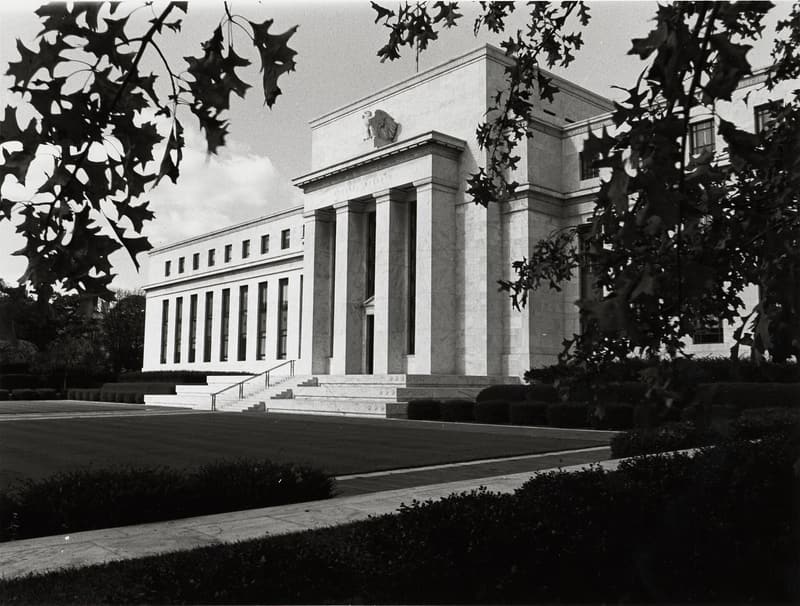
Representative photo · Photo: Federalreserve / Wikimedia Commons, Public domain
A Federal Reserve staff study indicates that post-2020 oil price transmissions could complicate monetary easing and impact risk appetite.
This is news, not investment advice. NexVani Media is not a SEBI-registered investment adviser and does not recommend buying or selling any security. Do your own research or consult a registered adviser before investing.
Oil prices could present an obstacle to lower borrowing costs and greater risk appetite among investors, even when energy is excluded from traditional core inflation calculations. A Federal Reserve staff study published on November 9 estimates a stronger connection between oil price shifts and underlying inflation using data from 2021 onward, which may potentially complicate future monetary easing efforts.
While energy is stripped out of core consumer price measures, indirect energy costs embedded in sectors such as transportation, telecommunications, and hospitality remain. Businesses can successfully pass these operational energy expenses on to consumers through prices outside of explicitly excluded categories. Furthermore, second-round effects stemming from the current oil shock have not yet fully materialized according to the study's authors.
Researchers pooled data from the United States, Japan, the euro area, Canada, and the United Kingdom, spanning from 2000 through the second quarter of 2026. The findings link a ten-percentage-point increase in relative oil-price inflation to an approximate 0.14-percentage-point rise in core inflation for the period beginning in 2021. This contrasts sharply with the pre-2021 period, where the estimated response was roughly 0.01 percentage point and statistically insignificant.
Stronger post-2020 oil transmission could complicate monetary easing, though second-round effects have not yet appeared.
Understanding the Core Bitcoin Connection
Separate structural simulations by Federal Reserve staff show that stronger oil transmission combined with sustained inflation persistence demands a significantly tighter policy stance, even in an environment of weakening economic activity. This creates a potential headwind for digital assets through investors' willingness to take risk, aligning with previous economic research regarding monetary tightening and crypto-price factors.
While the studies do not estimate a specific price response for assets like core bitcoin, the combined implications suggest that sustained core price pressure from oil could delay financing relief and constrain broader risk appetite. Observers note that upcoming inflation reports will help clarify whether persistent price pressures and reduced easing expectations continue to support this financing-risk interpretation.
Why it matters
This research highlights how global energy dynamics continue to influence broader financial conditions beyond direct fuel costs. For participants monitoring digital assets and broader financial markets, understanding the transmission of oil prices into underlying inflation provides essential context regarding future monetary policy paths and financing conditions.
Sources
More like this

Analysts Bitcoin Price Prediction Suggests 2.5% Move Ahead of CPI Data

Binance Halts MEXC Transfers After FinCEN Primary Money Laundering Concern

Bitcoin trading shows increased activity as sellers maintain market pressure