Senate Passes Bill Banning Prediction Market Bets on War, Terrorism and Death
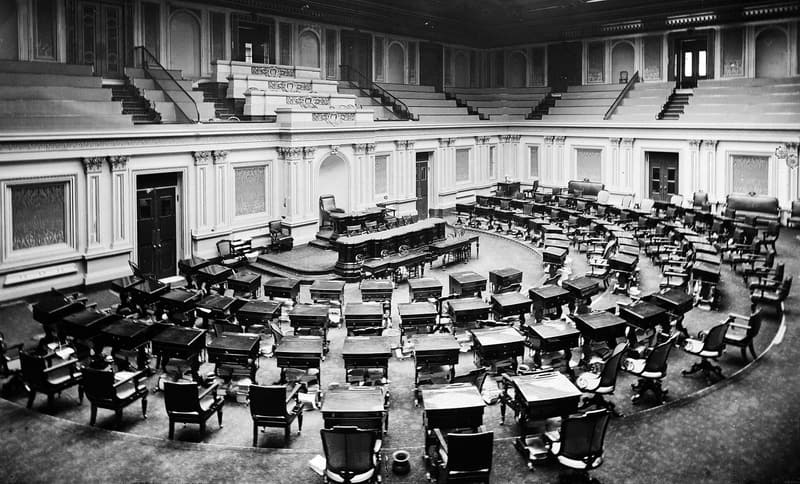
Representative photo · Photo: Brady-Handy Photograph Collection (Libra / Wikimedia Commons, Public domain
The U.S. Senate has passed the DEATH BETS Act, a bipartisan measure aimed at prohibiting prediction markets from listing contracts tied to tragic real-world events.
This is news, not investment advice. NexVani Media is not a SEBI-registered investment adviser and does not recommend buying or selling any security. Do your own research or consult a registered adviser before investing.
The U.S. Senate has officially moved to restrict how prediction markets operate, as the chamber recently passed a bill that would ban wagers on war, terrorism, assassinations, and individual deaths. The legislative action, which comes as many citizens search for what the senate passes bill today, marks a significant regulatory shift for platforms that allow users to trade on the outcomes of global events.
The Discouraging Exploitative Assassination, Tragedy, and Harm Betting in Event Trading Systems Act, commonly referred to as the DEATH BETS Act, was approved by voice vote on Wednesday, November 19. The legislation, introduced in March by Senator Adam Schiff (D-CA) and cosponsored by Senator John Curtis (R-UT), now heads to the House of Representatives for further consideration.
The Senate passed legislation to prohibit prediction markets from listing contracts involving war, terrorism, and death.
The proposed law seeks to amend the Commodity Exchange Act to prevent exchanges and clearinghouses registered with the Commodity Futures Trading Commission (CFTC) from listing or clearing event contracts that explicitly reference terrorism, assassination, war, or U.S. military operations. Additionally, the bill prohibits contracts that are reasonably expected to resolve based on the death of an individual. The CFTC would retain the authority to extend these prohibitions to similar activities through future rulemaking.
Prediction markets, such as Polymarket and Kalshi, have gained popularity by allowing users to bet on outcomes ranging from sports and elections to complex geopolitical developments. However, these markets have faced intense scrutiny from lawmakers who argue that they incentivize profiting from human tragedy and could potentially reward individuals with insider knowledge of military plans. Concerns have been raised regarding potential corruption, with some senators alleging that individuals close to political figures could exploit war-related markets for financial gain.
Legal pressure on these platforms is mounting beyond this specific bill. The CFTC has been actively working to curb these markets, including proposing rules to ban bets on outcomes stemming from war or assassination. Furthermore, various states have initiated legal action against prediction markets, arguing that certain event contracts function as unlicensed gambling. The CFTC has been involved in litigation against 12 states to defend its regulatory authority over these systems.
Why it matters
The passage of the DEATH BETS Act represents a direct challenge to the growing influence of prediction markets in the financial sector. By restricting the types of contracts these exchanges can offer, the legislation aims to curb the monetization of global instability and violence.
For users and market participants, this change limits the scope of speculative trading on geopolitical conflicts. It reinforces the authority of the CFTC to oversee event contracts and signals a broader regulatory crackdown on platforms that have previously attempted to bypass restrictions on sensitive, tragedy-linked betting.
Sources
More like this

Bitcoin Hits 60k Level as Market Liquidation Wave Hits $820 Million

Coinbase Expands Crypto Borrowing Service to New York Customers via DeFi Protocol

Block Report Reveals Most Bitcoin Payments on Square Are for Small Purchases