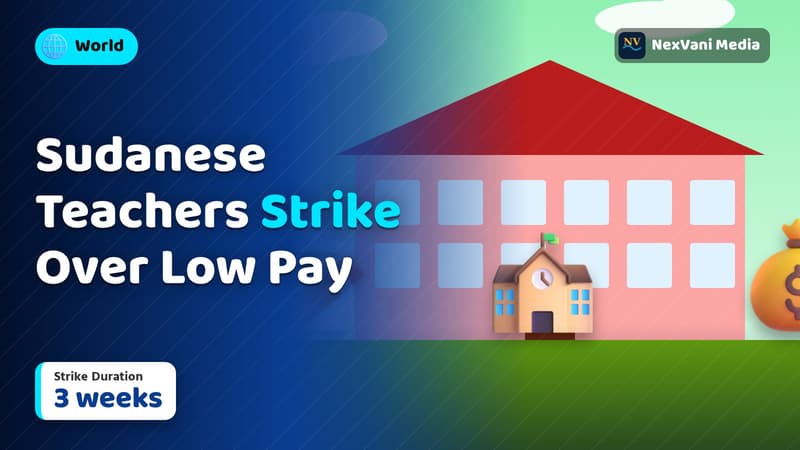
Sudanese Teachers Committee leads strike over low pay and poor school conditions
Illustration: NexVani Media
Educators in Khartoum are striking for a third week, demanding fair wages and urgent repairs to schools damaged by conflict and neglect.
Teachers in Khartoum are currently in the third week of a strike as they struggle to survive on stagnant wages that fail to cover basic living expenses. The Sudanese Teachers Committee has been leading the industrial action, highlighting a crisis that has left many educators unable to afford transportation or food for their families. For veteran teachers, the current monthly salary of 132,000 Sudanese pounds is insufficient, as the cost of essential items like cooking gas now exceeds the monthly pay.
The struggle of the Sudanese Teachers Committee
The ongoing protest follows months of failed negotiations with government officials. Educators have submitted formal memorandums to the Ministry of Education, the Ministry of Finance, and the presidential palace, yet their demands remain unaddressed. The financial strain has forced many teachers to seek secondary employment in the evenings, while others have considered leaving the profession entirely due to exhaustion and malnutrition.
Beyond salary concerns, the infrastructure of the education system is in a state of collapse. Teachers report working in classrooms with damaged roofs that leave them and their students exposed to the elements. These conditions have been exacerbated by the war between the Sudanese army and the Rapid Support Forces, which began in April 2023. The lack of investment and the accumulation of unpaid entitlements have further demoralized the workforce.
Sudanese teachers are striking to demand a living wage and safer working conditions amid a national crisis.
Government attempts to weaken the strike have included providing partial payments to some staff and relaxing attendance requirements to create an appearance of normalcy. While Prime Minister Kamil Idris recently ordered the payment of outstanding dues, the government has failed to provide a clear schedule or address core demands regarding a minimum wage increase. The committee is calling for a rise in the minimum wage to 500,000 Sudanese pounds, alongside the implementation of long-promised housing and meal allowances.
Why it matters
The persistent impasse threatens the stability of the entire education system in Sudan. As teachers continue to strike, students face further disruptions to their learning, and the lack of a resolution risks the permanent loss of experienced educators from the public sector.
The situation highlights the severe economic pressures facing public servants in conflict-affected regions. For the broader international community, the collapse of these essential services underscores the long-term impact of war on social infrastructure and the fundamental right to education.
Sources
More like this
Nine Foreigners Arrested in South Africa Over Alleged Ukraine War Plans

Protective barrier collapse at Tarbela Dam T-5 project causes flooding

EU aims to pick new ECB chief by year-end