Sudan factories struggle to restart after wartime losses
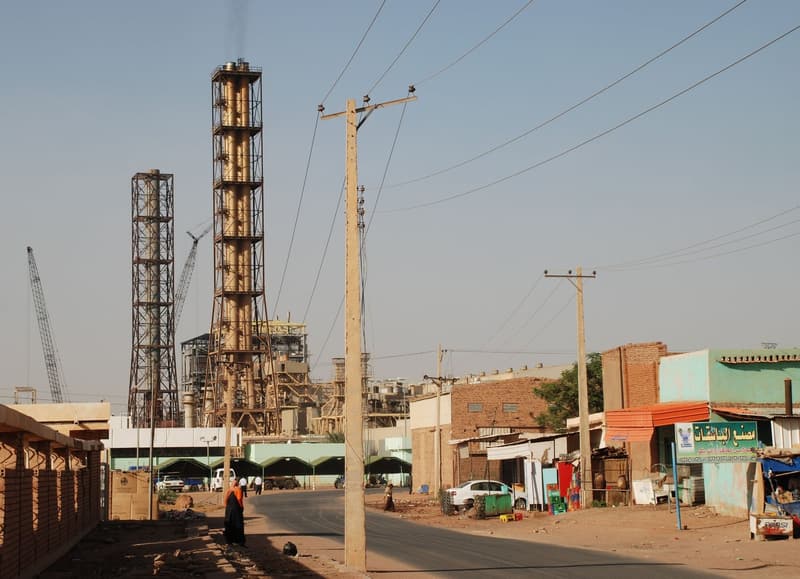
Representative photo · Photo: Bertramz / Wikimedia Commons, CC BY 3.0
Manufacturing facilities in Sudan face massive hurdles to resume operations after suffering extensive damage and looting during the ongoing war.
Mansour Gaily’s factory in Khartoum produced sweets for local consumers and provided employment for workers until fighting erupted between the Sudanese Armed Forces and the paramilitary Rapid Support Forces in April 2023. Production ground to a halt, mirroring thousands of other businesses across Sudan. More than three years later, Gaily is attempting to bring his business back to life, though the facility is operating at only 40 percent of its previous capacity. Gaily estimates total losses at one million dollars following destroyed machinery and required rebuilding efforts.
Gaily’s situation reflects the wider condition of sudan factories within a devastated manufacturing sector. Before the conflict, Khartoum served as a primary industrial hub producing food, textiles, and various consumer goods. Although the army recaptured the area last year and fighting has become sporadic, the industrial sector remains severely damaged. Ministry of Industry figures show that approximately 1,800 industrial facilities sustained damage during the conflict, with 650 completely destroyed.
Manufacturers report that the destruction of buildings, machinery, and raw materials was systematic. Abdulelah Mohamed, who owns a plastic products and recycling facility, noted that everything was lost and that the sector requires a completely new vision and planning to resume production. Additional challenges include ongoing electricity shortages, damaged transport networks, and rising import costs that complicate reopening even for facilities with surviving structures.
Sara Elfatih Khalil, chief executive of Al Teital Advance Industries, explained that her sesame oil factory remains shut down due to looted warehouses and a broken supply chain. Khalil noted that less than 10 percent of sector factories are operational, with active sites running intermittently amid high costs. Business owners also face severe financing constraints as they attempt to replace destroyed equipment and restock inventory without adequate capital.
The industrial shutdown has left many workers without livelihoods, while shopkeepers face product shortages and higher purchasing expenses. Abdelgadir Mohamed, a shopkeeper in Bahri Central Market, stated that the disappearance of locally manufactured items forces traders to rely on imports, which puts additional pressure on consumer household budgets.
War-damaged factories in Sudan operate at low capacity amid severe financial and infrastructure hurdles.
Why it matters
The ongoing disruption of Sudan's manufacturing sector leaves thousands of workers without employment and forces consumers to navigate higher prices and product shortages. As factories struggle to restart, the lack of local production increases reliance on more expensive imports, placing further strain on household budgets and delaying broader economic recovery.
Sources
More like this

David Jones Enters Administration As Thousands of Jobs Face Uncertainty

Pound rises to highest level since Brexit referendum a decade ago

Australia inflation and misery index compared globally