UN Warns on Security Laws as UK Court Weighs Palestine Action Ban
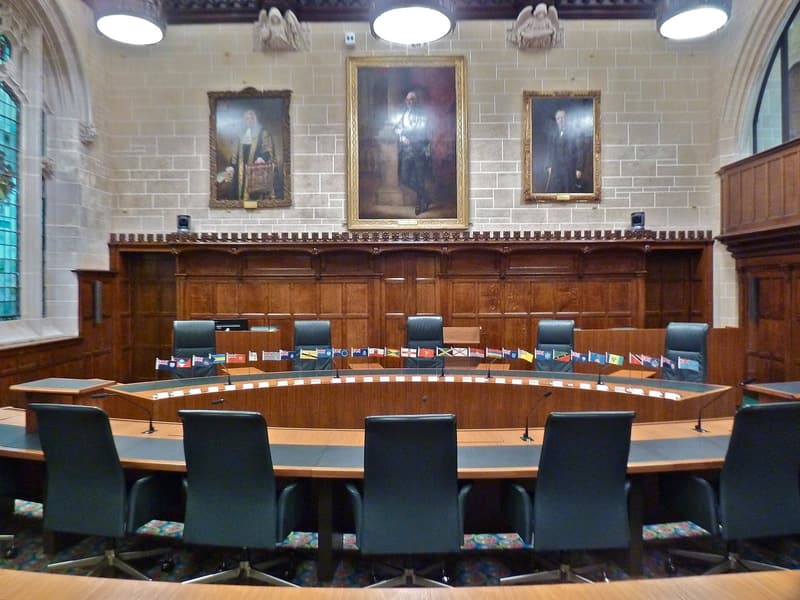
Representative photo · Photo: Anthony O'Neil / Wikimedia Commons, CC BY-SA 2.0
The UN human rights committee has issued a warning against the misuse of security laws as the UK supreme court considers the palestine action proscription.
The United Nations human rights committee has issued a warning regarding the misuse of counter-terrorism and national security legislation. This development coincides with the United Kingdom's highest court examining the legality surrounding the proscription of palestine action. Released on Thursday, the committee's first comprehensive guidance on freedom of association criticises vaguely phrased domestic laws that target extremism and undesirable groups.
While the publication does not explicitly mention the activist group, committee vice-chair Hélène Tigroudja noted that the initiative was prompted by developments in several nations, including the United Kingdom, North Korea, Russia, China, and Israel. Tigroudja highlighted that while national security and counter-terrorism are accepted reasons for limiting association rights, these justifications are frequently defined too vaguely and misused by authorities. According to the committee, such broad interpretations are often employed to criminalise trade unionists, journalists, climate campaigners, and human rights defenders.
The committee observed a global trend of exploiting terrorism rhetoric against various associations and their members, exposing them to public criticism and severe legal penalties like heavy fines and detention. Last year's decision to ban the direct action group faced criticism from civil liberties organisations, politicians, and former security and prosecution officials. The group was the first direct action organisation proscribed under the UK Terrorism Act, placing it in the same category as groups like al-Qaida and Boko Haram.
During the supreme court proceedings, a lawyer for the organisation described its goal as disrupting the supply of weapons from the UK to Israel during the conflict in Gaza, citing a risk of irreparable prejudice to Palestinian rights as noted by the International Court of Justice. Israel has denied allegations of war crimes and genocide. The UN guidance states that advocating for accountability, reporting rights violations, or defending human rights cannot be categorized as a breach of public order or a security threat.
The UN warns against using vague security laws to suppress civil liberties and activist groups.
Palestine Action Legal Challenge
The UK supreme court is expected to rule on whether the proscription was lawful after hearing arguments that the ban disproportionately infringed upon rights to free speech and protest. Huda Ammori, a co-founder of the organisation who initiated the legal challenge, stated that the UN report goes to the core of the case. She urged the supreme court to overturn what she termed a dangerous and disproportionate ban, adding that the matter would be taken to the European Court of Human Rights if necessary.
Why it matters
This development addresses the global balance between national security measures and the protection of fundamental freedoms such as association and expression. The UN committee's guidance establishes international scrutiny over how governments define terrorism and extremism, potentially influencing legal challenges and civil liberties debates worldwide.
Sources
More like this
US and Venezuela establish military ties following Venezuela Maduro capture

Pakistan minister to visit India for SCO forum as pakistan india tensions persist

Mosque Set on Fire in Northern Israel as Politicians Blame Incitement