What’s in the air you breathe? How to stay safe during smog season
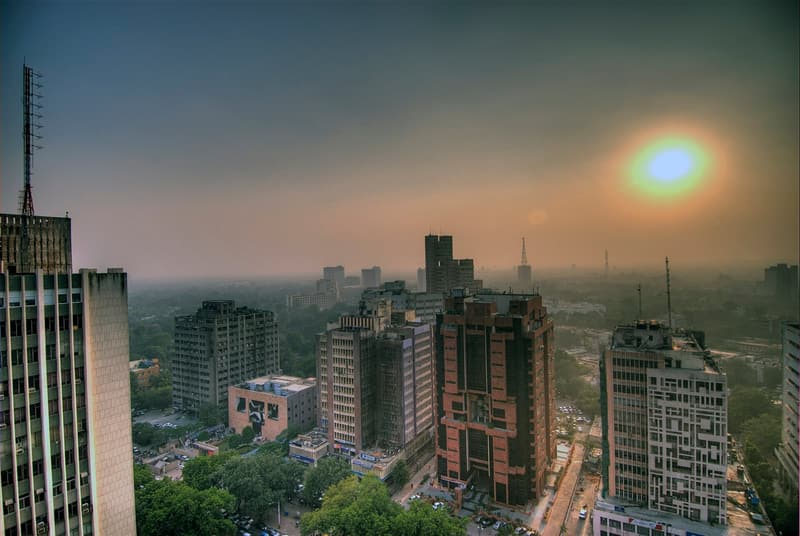
Representative photo · Photo: wili hybrid Original uploader was Lokant / Wikimedia Commons, CC BY 2.0
As winter descends, South Asia faces a hazardous smog season. Understanding what how to do to protect your health is critical as air quality reaches dangerous levels.
As winter approaches in the Northern Hemisphere, residents across South Asia are once again bracing for the annual smog season. In cities from New Delhi to Dhaka, a thick grey haze has blanketed the region, with air quality monitoring platform IQAir reporting hazardous levels exceeding an Air Quality Index (AQI) of 350 in parts of the Indian capital last week. Understanding what how to do to mitigate exposure is increasingly vital as pollution levels climb.
Winter smog is driven by a combination of human activity and geography. During colder months, a layer of warm air often traps cooler air near the ground, preventing pollutants from vehicles, factories, and crop burning from dispersing. This effect is particularly pronounced in the Indo-Gangetic Plain. Hemmed in by the Himalayas, this region—spanning parts of India, Pakistan, Nepal, and Bangladesh—suffers from weak winds and a shallow air layer that leaves pollution with nowhere to go.
Air pollution is linked to seven million premature deaths annually, with South Asian cities hit hardest.
The impact of particulate matter
While the air is primarily composed of nitrogen and oxygen, it also contains harmful gases and tiny particles. Monitoring stations track pollutants like ozone and nitrogen dioxide, but the most dangerous is PM2.5. These particles are 2.5 micrometres or less in diameter—roughly 30 times thinner than a human hair. Because of their size, they can travel deep into the lungs, enter the bloodstream, and damage organs, including the heart and brain.
Data from 2025 highlights the severity of the crisis, with 42 of the world’s 50 most polluted cities located in India and Pakistan. Loni, near Delhi, topped the list with PM2.5 levels over 22 times the World Health Organization’s recommended limit. In Delhi, vehicles account for 23 percent of winter pollution, while biomass burning contributes 20 percent.
Global mitigation efforts
Governments are testing various strategies to combat poor air quality. Cities like Paris have implemented car-free days, which significantly reduced nitrogen dioxide levels. London’s Ultra Low Emission Zone has successfully lowered roadside pollution by charging high-emission vehicles. Meanwhile, Krakow, Poland, achieved a 40 percent reduction in average annual PM2.5 levels by banning solid fuels for home heating and replacing thousands of coal and wood-burning devices.
Why it matters
Air pollution poses a severe health risk, particularly for children, the elderly, and those with existing respiratory or heart conditions. With millions in South Asia living in the world’s most polluted region, the toxic winter air significantly increases the risk of stroke, heart disease, and lung cancer for a vast population.
Sources
More like this

Byron Bay Doula Inquest Hears Conflicting Accounts After Newborn Death

NHS Records Breach: Deeply concerning reports of staff snooping
Drinking beer and spirits linked to kidney damage risk, study finds