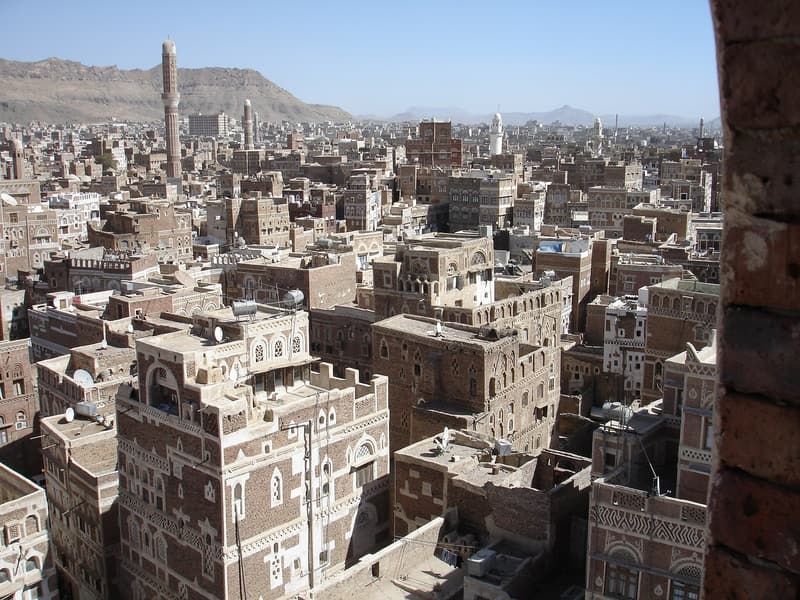
Yemeni Parliament Approves Law Designating Houthis as Terrorists
Representative photo · Photo: stepnout / Wikimedia Commons, CC BY 2.0
Yemen's parliament has unanimously passed legislation labeling the Houthis a terrorist organization, aiming to restrict the group's financing and activities amid escalating conflict.
Yemen’s parliament has unanimously approved a law designating the Houthis as a “terrorist organisation,” marking a significant escalation in the government’s stance against the group. As the latest Yemeni Houthis news highlights, the legislation criminalizes the group’s activities and financing, following years of intense fighting between the Iran-backed faction and forces loyal to the internationally recognized government. The vote, conducted via videolink over two sessions on Monday, concludes a process that began when the bill was first tabled in April 2019.
The Yemeni parliament has officially designated the Houthi group as a terrorist organization to curb its influence.
Formalizing the Terrorist Designation The legislation, which consists of 55 articles, classifies the Houthis—also known as Ansar Allah—and all their political, military, and civilian wings as a “terrorist organisation” and a “rebellious faction.” The law mandates strict penalties for offenses such as seizing state authority, besieging cities, attacking civilians, and targeting international shipping. Notably, some of these crimes may now carry the death penalty. Furthermore, the bill establishes legal procedures to trace, freeze, and confiscate assets linked to the group.
This parliamentary move follows an executive decision by the National Defence Council in October 2022 and aligns with the classifications used by the United States and Saudi Arabia. The legislation has been formally submitted to Rashad al-Alimi, head of the Presidential Leadership Council, for final signing. According to political science professor Ismail al-Suhaili, transitioning from an executive order to formal legislation provides the government with greater legal authority, though it may complicate future peace negotiations by shifting the focus away from power-sharing.
Escalating Conflict on the Ground The vote comes during a period of renewed hostilities. Following a relative calm, the Houthis announced an escalation in late June, citing a desire to lift a blockade. Recent months have seen significant ground shifts, with Houthi offensives in Taiz and Hodeidah governorates. Despite a government operation launched in October to reclaim territory, the Houthis have continued to advance, while heavy fighting persists in Marib, al-Jawf, and Lahij. The group has also intensified attacks on targets within Saudi Arabia, prompting retaliatory strikes from the Saudi-led coalition.
Why it matters This law signals a shift toward a harder-line military posture, potentially complicating humanitarian aid delivery and the operations of financial institutions working in conflict zones. By tightening the legal framework around the Houthis, the government aims to disrupt the group's funding, though experts warn this could deepen the nation's financial split and discourage international aid organizations from operating in Houthi-controlled areas.
Sources
More like this
President Trump Says US Taking Potential Iranian Plot Seriously

Helping UK youth into work: They learn the job doing the job
Trump Announces Critical Minerals Agreements at Quad Meeting in Manila